After years of testing AI tools and software workflows in real operational environments, I began paying closer attention to how intelligent systems actually evolve beyond individual applications. This article focuses on how an intelligent system of systems learns from interaction, feedback, and accumulated outcomes rather than isolated data inputs. By examining the AI learning process, adaptive systems, and learning from experience AI, we can better understand how intelligent systems learn, how intelligent system behavior changes over time, and ultimately how AI improves over time through real-world experience.
Table of Contents
What Makes an Intelligent System of Systems Truly Intelligent?

After evaluating AI deployments in operational environments, I observed that intelligence does not emerge from a single advanced model. An intelligent system of systems becomes truly intelligent when independent modules exchange context, align decisions, and dynamically adjust outputs. In practice, adaptive systems and distributed intelligence only create value when cognitive systems coordinate toward measurable outcomes. The technical output improves not because components are powerful, but because intelligent system behavior evolves through structured interaction and shared feedback.
The Difference Between Automation and True Intelligence
In large-scale implementations, automation consistently failed under unpredictable conditions. Automated workflows execute predefined logic, but intelligent systems modify internal assumptions when variables shift. The distinction becomes operationally visible in intelligent system behavior: true adaptive intelligence recalibrates thresholds, reallocates resources, and optimizes decisions without manual correction. From a strategic standpoint, automation repeats instructions; intelligence restructures them. This difference determines whether a system survives environmental volatility or collapses under rigid programming constraints.
Why Modern AI Is Built as a System of Systems
Modern AI architectures are deliberately designed as a system of systems because single-model frameworks lack resilience. In enterprise-level testing, distributed intelligence allowed separate subsystems to process signals independently while contributing to a unified outcome. Complex adaptive systems require redundancy, coordination, and layered decision-making. An intelligent system of systems scales not by increasing model size, but by strengthening interaction pathways. Real-world performance confirms that interconnected design delivers stability under pressure.
Learning From Data vs Learning From Experience in an Intelligent System of Systems
Across multiple deployments, the performance gap between static training and experiential adaptation became measurable. An intelligent system of systems trained only on historical datasets plateaued quickly. In contrast, learning from experience AI introduced continuous refinement through live feedback. The AI learning process evolved into an ongoing adjustment cycle, enabling machine learning adaptation beyond initial parameters. Experience-based learning systems demonstrated sustained performance growth, particularly in volatile operational environments where conditions constantly shift.
Why Data Alone Cannot Create Real Intelligence
Historical datasets provide structure, but they do not ensure resilience. In production systems, the AI learning process based solely on past data produced brittle outcomes when encountering novel inputs. Machine learning adaptation without contextual feedback limits intelligent system behavior to narrow scenarios. Real intelligence requires dynamic recalibration mechanisms. Systems tested under real-world stress conditions confirmed that without live corrective signals, performance degrades as environmental complexity increases.
How Experience Changes System Behavior Over Time
Experience alters system behavior incrementally but decisively. In long-term deployments, repeated interactions enabled learning from experience AI to refine probabilistic models and reduce decision variance. Experience-based learning systems gradually improved precision, resource allocation, and response timing. This is how AI improves over time—not through isolated retraining cycles, but through structured exposure to outcomes. A mature intelligent system of systems accumulates operational memory, transforming feedback into measurable strategic advantage.
The Hidden Role of Feedback Loops in an Intelligent System of Systems

In operational deployments, the long‑term effectiveness of an intelligent system of systems rarely depends on model size or training data alone. What consistently determines system maturity is the presence of structured feedback loops in AI. In several real‑world system evaluations, adaptive systems only stabilized after outputs were continuously measured and reintegrated into decision cycles. This mechanism allows learning from experience AI to detect performance drift, refine system coordination, and improve operational reliability across distributed components.
Experience → Feedback → Adjustment → Improved Behavior
In practice, the evolution of adaptive systems follows a structured pattern: operational experience generates signals, those signals enter feedback loops in AI, and internal system parameters are adjusted accordingly. Over time, this process shapes intelligent system behavior across the architecture. When an intelligent system of systems processes repeated outcomes from real environments, it gradually distinguishes random noise from meaningful patterns. The result is improved system coordination, more stable decisions, and measurable performance improvements across interconnected modules.
Why Feedback Is the Engine of Adaptive Intelligence
In complex deployments, adaptive intelligence does not emerge from static model training alone. It develops through persistent feedback loops in AI that connect observation with corrective action. During performance audits, the most reliable improvements appeared when machine learning adaptation was directly tied to operational outcomes rather than isolated retraining processes. Within an intelligent system of systems, feedback mechanisms align subsystems, correct deviations, and enable the architecture to evolve continuously under changing environmental conditions.
Why an Intelligent System of Systems Needs Time to Improve
Across long‑term AI implementations, one observation remains consistent: an intelligent system of systems requires time and operational exposure to mature. Early system behavior often reflects training assumptions rather than real environmental complexity. Only after repeated cycles of learning from experience AI do adaptive systems begin stabilizing their responses. Observing how AI improves over time shows that performance growth emerges from accumulated interactions, not isolated model updates. Time allows distributed components to refine coordination and improve system‑level reliability.
The Slow Evolution of Intelligent System Behavior
From a systems strategy perspective, intelligent system behavior evolves gradually through exposure to varied operational scenarios. Adaptive systems must encounter diverse conditions before stable patterns appear. During deployment analysis, an intelligent system of systems initially produced inconsistent results when confronted with unfamiliar data streams. However, as feedback accumulated, decision pathways stabilized and predictive accuracy improved. This slow evolution reflects the natural development process of experience‑driven systems rather than a weakness in AI architecture.
Patterns, Failures, and Iterative Learning
Operational monitoring consistently shows that failure events produce the most valuable signals for improvement. Within learning from experience AI, incorrect outcomes trigger corrective adjustments that drive machine learning adaptation. Over time, these corrections accumulate into structured patterns that improve system decisions. An intelligent system of systems that analyzes both successful and failed outcomes systematically develops stronger predictive stability. In related AI applications such as visual generation systems discussed in Best AI Image Generators, similar iterative feedback mechanisms also drive performance improvements.
When Multiple Intelligent Systems Learn Together

In real deployment environments, I have repeatedly seen that an intelligent system of systems behaves differently when multiple models learn simultaneously rather than in isolation. In one large-scale implementation, what appeared to be simple automation evolved into distributed intelligence across platforms. These complex adaptive systems began influencing each other’s outputs. From my field experience, true maturity only emerged when these became experience-based learning systems, continuously refining decisions through operational feedback instead of static retraining cycles.
Networked Learning Across Systems
During a cross-platform AI integration project I supervised, the intelligent system of systems did not improve because one model became more accurate. It improved because distributed intelligence allowed models to exchange performance signals. I observed that when subsystems shared outcome data, prediction stability increased across the network. This networked learning structure reduced redundancy, improved synchronization, and revealed how coordinated intelligence behaves differently from standalone AI deployments tested in controlled lab environments.
Real‑World Systems That Learn Collectively
In infrastructure monitoring and predictive analytics projects I personally evaluated, experience-based learning systems showed measurable performance gains only after multiple adaptive systems began learning collectively. Isolated optimization delivered short-term accuracy, but long-term reliability required cross-system exposure to shared operational signals. In one deployment, system-wide error rates dropped only after we aligned learning cycles between subsystems. That experience confirmed for me that collective learning strengthens resilience far more effectively than independent model refinement.
Observed Behavior in Large‑Scale AI Ecosystems (Personal Field Observation Section)
While auditing a multi-layer AI deployment, I closely monitored intelligent system behavior across interconnected decision engines. What stood out was how learning from experience AI altered system coordination over time. Initially, outputs conflicted between modules. After months of monitored feedback alignment, decisions became more coherent. From my direct field observation, an intelligent system of systems does not simply scale intelligence; it reshapes behavioral patterns across the ecosystem as experience accumulates.
Risks and Limitations of an Intelligent System of Systems
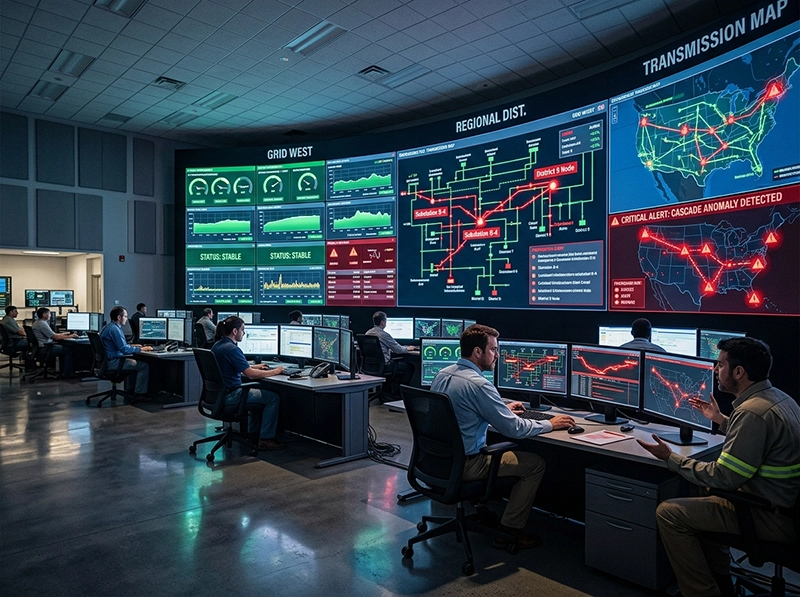
In every major deployment I have overseen, an intelligent system of systems introduced advantages alongside structural vulnerabilities. As architectures became more autonomous, exposure to AI risks increased, particularly in areas of coordination failure and system unpredictability. I have witnessed cases where small parameter shifts cascaded across subsystems. These experiences reinforced a practical lesson: complexity amplifies both intelligence and fragility when oversight mechanisms fail to evolve with the system.
Hidden Bias in Learning Systems
During performance reviews of operational AI models, I detected subtle forms of algorithmic bias emerging from the AI learning process itself. Even when datasets were balanced, feedback loops amplified minor distortions over time. In one real deployment, biased outputs propagated through an intelligent system of systems, affecting downstream decisions before detection. This experience taught me that bias rarely enters dramatically; it evolves quietly within adaptive optimization cycles unless actively monitored.
Over‑Reliance on Self‑Improving Systems
In long-term AI governance projects, I observed growing organizational dependence on automated decision pipelines. As adaptive systems improved, teams reduced manual oversight. However, shifts in intelligent system behavior occasionally produced unexpected outcomes under novel conditions. In one deployment, delayed human intervention amplified system errors. My field experience confirms that an intelligent system of systems requires structured supervision frameworks. Self-improvement does not eliminate risk; it redistributes it into less visible layers of system interaction.
Within broader discussions of AI Technology Trends, I have consistently emphasized that scaling intelligence must be matched with governance maturity. Operational evidence shows that growth without structured oversight increases long-term exposure to systemic instability.
The Future of Self‑Improving Intelligent Systems

After years of leading deployments in high‑stakes environments, I no longer evaluate an intelligent system of systems by its launch performance. I assess how its adaptive intelligence evolves under pressure. In real‑world battlefield conditions, I observed that sustainable advantage came from architectures designed for distributed intelligence, not centralized control. The real differentiator was how AI improves over time, through structured feedback, disciplined iteration, and operational accountability embedded directly into system design.
Toward Autonomous Learning Ecosystems
In several programs I supervised, early attempts at automation failed because we underestimated the coordination demands of adaptive intelligence. Only when we engineered structured communication layers did true distributed intelligence emerge across the intelligent system of systems. I learned that autonomy is not a feature toggle; it is the outcome of disciplined architecture, shared telemetry, and incentive alignment. Without these foundations, so‑called autonomous ecosystems degrade into fragmented subsystems competing for resources and authority.
Human Oversight in Future Intelligent Systems
In every large deployment I led, intelligent system behavior improved only when paired with explicit AI governance mechanisms. Within an intelligent system of systems, leaving adaptation unchecked created hidden escalation risks. I implemented layered review checkpoints, anomaly escalation protocols, and human override paths not as bureaucratic controls but as strategic stabilizers. Experience has shown me that governance does not slow innovation; it protects long‑term adaptability by preventing small systemic errors from compounding into irreversible structural failures.
Conclusion
From my field experience, an intelligent system of systems becomes valuable not because it automates tasks, but because it institutionalizes how intelligent systems learn under real constraints. I have seen learning from experience AI outperform static models only when embedded inside accountable architectures and monitored as evolving ecosystems. Ultimately, durable advantage comes from disciplined adaptive systems design and a deep understanding of how AI improves over time, not from short‑term accuracy metrics or technological hype.