
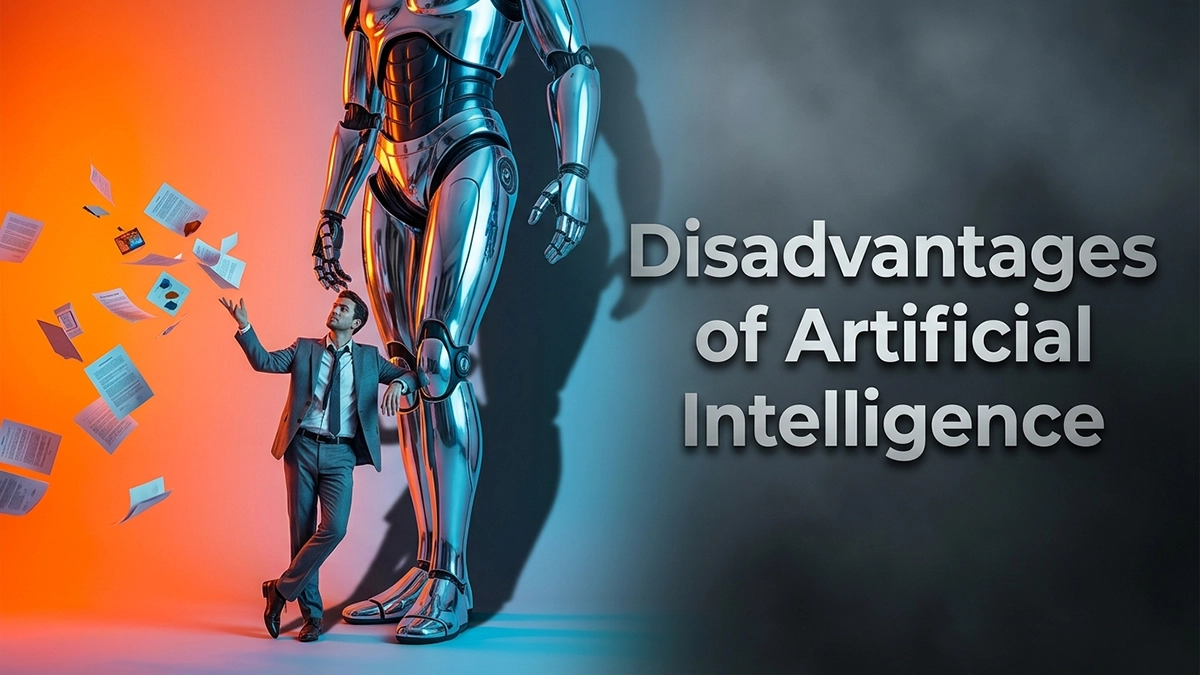
While the rapid integration of automation is undeniable, my professional experience auditing industrial workflows reveals that the disadvantages of artificial intelligence are becoming increasingly critical to address. AI has permeated every facet of modern life, making it nearly impossible to operate without these tools. However, behind the efficiency lies a complex web of risks. Beyond the surface-level benefits, significant technical gaps remain. Recognizing these flaws isn’t about being pessimistic; it’s about building a sustainable, human-centric digital ecosystem in a battlefield of evolving algorithms.
In my years of managing digital architectures, I’ve learned that ignoring the disadvantages of artificial intelligence can be a fatal strategic error. While the hype emphasizes speed, the real-world battlefield demands precision. We must navigate these ethical and technical pitfalls to truly master high-impact growth.
Table of Contents
The Economic Illusion: Why Disadvantages of Artificial Intelligence Start with Your Budget

Navigating the financial landscape of modern tech reveals a sobering truth: the disadvantages of artificial intelligence often manifest first in the balance sheet. While marketing teams promise instant ROI, the reality in the trenches is far more demanding. To truly Work Smarter with AI, leaders must look beyond the initial hype and calculate the long-term operational drain that these advanced systems impose on enterprise-level infrastructures and specialized human capital.
Costly Implementation and High-End Infrastructure
From my experience auditing backend architectures, costly implementation isn’t just a startup hurdle; it’s a persistent enterprise burden. Scaling AI requires immense GPU clusters and high-tier API credits that can quickly drain a project’s budget. Beyond hardware, the hidden fees of data sanitization and expert oversight are staggering. Integrating these models into a modular monolith often reveals that the actual overhead far exceeds initial estimates, forcing a tactical retreat for many unprepared development teams.
Maintenance Drift: The Silent Decay of AI Models
A significant technical pitfall is “Data Drift,” where models lose accuracy as real-world information evolves. This silent decay represents one of the primary disadvantages of artificial intelligence in long-term deployments. Without constant retraining and manual fine-tuning, an AI that performed perfectly in January might provide hallucinated or irrelevant results by June. This cycle of continuous maintenance demands a dedicated DevOps pipeline, ensuring that the system stays aligned with current market trends and operational realities.
The Black Box Problem: Ethical Concerns of AI in Decision Making
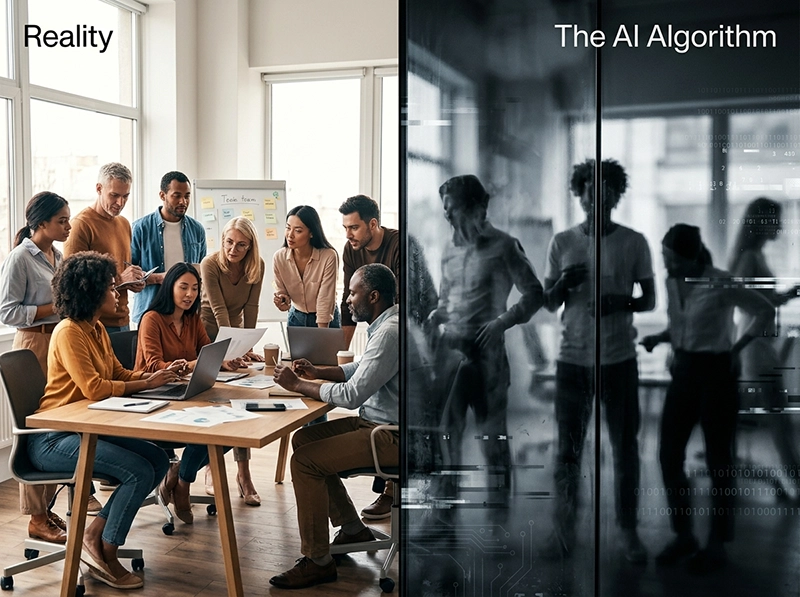
Trust is the ultimate currency in digital growth, yet the “Black Box” nature of neural networks creates profound ethical concerns of AI. When algorithms make autonomous choices, the lack of transparency can lead to systemic failures that are difficult to trace or rectify. Understanding the internal mechanics is no longer optional. It is a mandatory requirement for any strategist who wants to deploy automated solutions without compromising their brand’s integrity or social responsibility.
Algorithmic Bias Examples in Real-World Workflows
In practice, dirty datasets are the primary source of automated prejudice. My observations show that ai bias and discrimination often stem from historical human errors baked into the training material. For instance, what is algorithmic bias if not a reflection of our own flawed societal patterns? When these biases infiltrate recruitment or healthcare systems, they don’t just produce bad data—they cause real-world harm. Auditing these outputs is essential to prevent technology from amplifying existing social inequalities.
Lack of Transparency and the Accountability Gap
One of the most complex ethical concerns of AI is the inability to explain “why” a specific decision was reached. This lack of transparency creates a massive accountability gap in professional environments. When a model fails, identifying the root cause within billions of parameters is nearly impossible for average users. As a strategist, relying on a system you cannot audit is a high-stakes gamble. Transparency is the only way to move from blind faith to verified algorithmic trust.
The Human Factor: AI Job Displacement and the Skill Gap

The most debated aspect of our current era centers on job displacement and how automation reshapes professional landscapes. While many view the disadvantages of artificial intelligence through the lens of total unemployment, my observation within high-level development teams suggests a more nuanced “role shift.” The real danger is the widening gap between traditional manual skills and evolving algorithmic demands. If we don’t bridge this divide with proactive training, we risk leaving a significant portion of the global workforce behind in an increasingly automated, data-driven economy.
Which 3 Jobs Will Survive AI?
Strategic high-level roles are surprisingly resilient against the current wave of automation. Based on recent market trends, I believe complex legal strategists, specialized mental health professionals, and high-end creative directors are the most secure positions today. These roles rely heavily on nuanced human empathy and complex ethical judgment—areas where the disadvantages of artificial intelligence are most apparent. These positions require a unique “human touch” that current neural networks cannot replicate, proving that emotional intelligence remains our most valuable asset.
Job Role Shift: Moving from Creators to AI Auditors
From my personal perspective leading complex backend projects, the primary impact of ai on human workers is the transition from “building” to “auditing.” We no longer just write raw code; we verify the logic generated by Large Language Models, which often highlights the inherent disadvantages of artificial intelligence in complex logic handling. This fundamental shift demands a much deeper understanding of system architecture rather than just mastering syntax. Failing to adapt to this auditor mindset is a significant professional risk, as repetitive manual tasks are quickly being absorbed by more efficient automated agents.
Security Vulnerabilities: Beyond the AI Hype

As an experienced SEO strategist, I’ve seen how integrating third-party models introduces unforeseen security risks to stable environments. The rush to adopt these tools often overlooks the technical vulnerabilities inherent in modern AI architectures. While many entrepreneurs look for ways to Make Money with AI, they inadvertently expose their proprietary data to external leaks. Mastering these complex systems requires a rigorous security-first mindset, ensuring that the “brain” of your digital brand doesn’t become the weakest link in your defense.
Data Privacy Risks in LLM Integration
One of the major cons of artificial intelligence is the potential for privacy invasion during massive data training cycles. When sensitive user information is processed through public models, the risk of data persistence becomes a legal nightmare. In my work with Cloudflare Workers and enterprise databases, I’ve noticed that “anonymized” data isn’t always as safe as it seems. Pattern recognition allows sophisticated AI to reconstruct identities, making robust encryption and local model hosting a mandatory requirement for any serious brand.
Security Risks: Prompt Injection and Model Hijacking
Technical audits frequently reveal that AI interfaces are highly susceptible to “Prompt Injection,” where malicious users manipulate the model’s output. These security risks can lead to unauthorized data access or the generation of harmful content that damages a brand’s reputation. Protecting against these attacks requires a layered defense strategy, treating AI inputs with the same level of suspicion as SQL injections. This ensures that the system remains a tool for growth rather than a gateway for hackers and digital threats.
Technical Audit: What is the Biggest Problem with AI Today?

In the final analysis of our technical landscape, identifying what is the biggest problem with AI reveals a crisis of “Reliable Truth.” Hallucinations and the lack of a grounding mechanism in modern models mean they can provide confident, yet entirely false, information. This is particularly dangerous for medical or financial sectors where accuracy is absolutely non-negotiable. To mitigate the core disadvantages of artificial intelligence and understand the deeper limitations of artificial intelligence, we must treat every automated output as a raw draft that requires strict human verification and expert oversight to maintain total system integrity.
The Hallucination Loop: When AI Reinvents Reality
The most frustrating technical hurdle is the “Hallucination Loop,” where a model generates plausible-sounding lies based on statistical probability. During my deep-dive audits, I’ve seen AI invent non-existent library functions or historical facts with total confidence. This flaw highlights the inherent disadvantages of artificial intelligence when tasked with high-precision assignments. Without a human-in-the-loop to cross-reference data points, relying on automated outputs for critical documentation is a dangerous strategy that can lead to systemic failures.
Conclusion
In summary, balancing the rapid evolution of technology with a clear understanding of the disadvantages of artificial intelligence is essential for any modern digital strategy. While these tools offer unprecedented speed, they cannot replace the critical thinking and ethical oversight that human experts provide. Navigating the complexities of high costs, algorithmic bias, and security vulnerabilities requires a proactive rather than reactive approach. By acknowledging these limitations now, we can build more resilient systems that leverage automation without compromising the core values of accuracy, privacy, and creative integrity.
Mastering the future of innovation means viewing these challenges not as barriers, but as necessary guardrails for sustainable growth. As we have explored, the primary disadvantages of artificial intelligence stem from a lack of reliable truth and emotional nuance. Moving forward, the goal is to integrate these models into our workflows as supportive assistants rather than autonomous decision-makers. By maintaining human-in-the-loop systems and prioritizing transparency, we ensure that our digital transformation remains secure, ethical, and aligned with the long-term success of both businesses and society.