
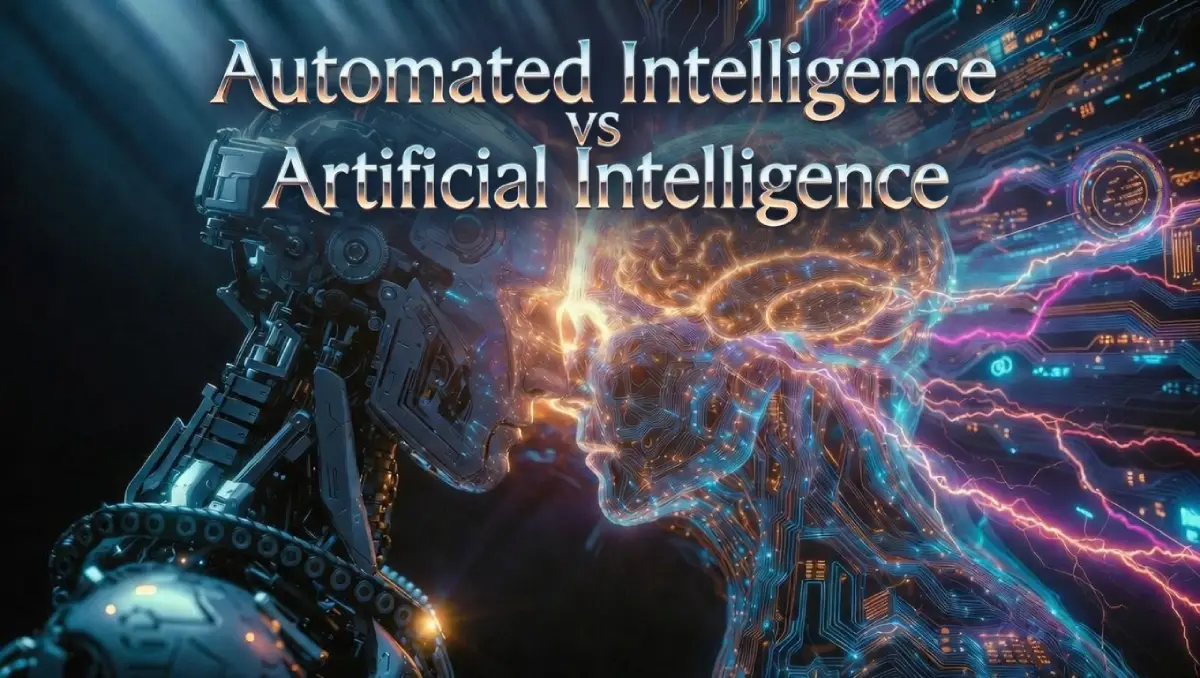
I still cringe at my first rigid scripts. It was “dumb” tech—useful, but as stiff as a board. Now, the industry is obsessed with the automated intelligence vs artificial intelligence debate. To me? It’s the difference between a toaster and a chef. People keep asking what is ai automation, yet they’re still drowning in manual spreadsheets. They haven’t mastered how to use ai for automation to handle real-world chaos. We’re finally moving beyond mindless AI and automation, building digital brains that actually think.
Table of Contents
The Foundations: Decoding Automation vs Artificial Intelligence in a Modern Workflow
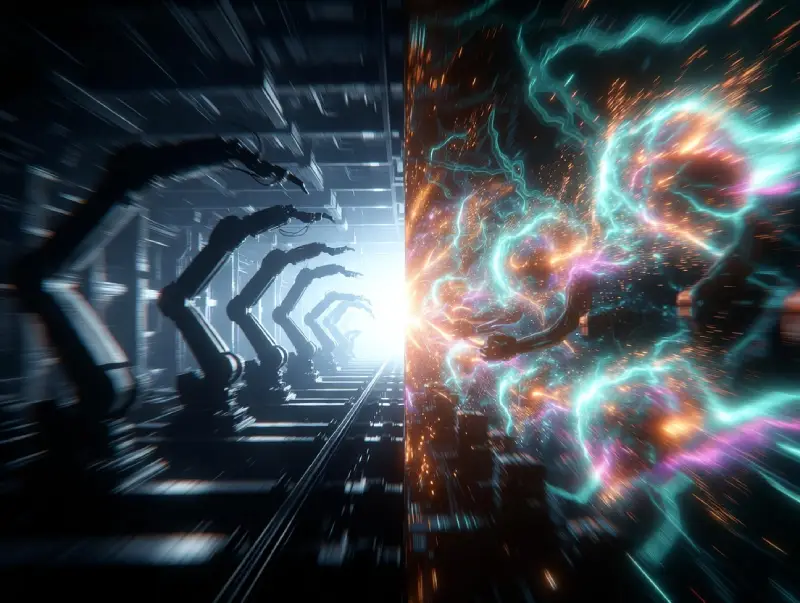
In my early days as a consultant, I saw companies throwing money at “dumb” tools, hoping for miracles. The automation vs artificial intelligence gap isn’t just semantics; it’s about control. Traditional systems are like trains on tracks—fast, but they can’t steer. Real AI, however, is the driver. Most leaders get blinded by the hype, failing to see that one follows a map while the other actually reads the road. It’s a messy, vital distinction for any modern, high-speed workflow.
Robotic Process Automation (RPA) and the Limits of Rule-Based Systems
If you’ve ever hired an RPA developer, you know the drill: if ‘A’ happens, do ‘B’. It’s efficient but fragile. Back when I explored the UiPath Academy, I realized robotic process automation is just a high-speed digital assembly line. It’s great until a website changes a single button. Then? Everything breaks. These rule-based systems are the workhorses of industry, but they lack the “eyes” to see when the world around them has shifted.
From Static Scripts to Smart Automation: Why Learning Models Win
Why settle for a script that chokes on surprises? I’ve switched my focus to smart automation because static code is a dead end. Integrating rpa robotic process automation with neural networks changes the game. It’s the leap from a calculator to a brain. Instead of crashing when data gets messy, learning models lean in. They recognize patterns, fix their own errors, and actually get sharper over time. In 2026, if your tech isn’t learning, it’s already becoming obsolete.
The Implementation Audit: Why AI vs Automation Matters for Your Career

Choosing between AI vs automation isn’t just a tech decision; it’s a career survival move. I’ve seen developers cling to old scripts while the world shifts toward cognitive systems. If you’re still stuck in the “if-this-then-that” loop, you’re building on sand. The real money and impact are moving toward autonomous workflows. Understanding this divide is the only way to stay relevant. It’s about deciding whether you want to be the one fixing the machine or the one teaching it to think.
Predictive Shift: How to Use AI for Automation Without Losing Control
Many managers panic when I explain how to use ai for automation because they fear a “black box” taking over. I always tell them: AI isn’t a replacement; it’s an upgrade. During a recent audit, we replaced rigid filters with predictive models that actually anticipated client needs. To stay ahead, you should check out the latest agentic AI trends which are redefining boundaries. It’s about smart delegation, ensuring the machine handles the chaos while you maintain the strategic veto.
Intelligent Process Automation (IPA) and the Rise of AI Workflow Automation
Static workflows are dying. I’ve transitioned my clients to intelligent process automation because it’s the only thing that scales. When you layer ai workflow automation over traditional silos, the efficiency spike is staggering. It’s like giving your office a central nervous system. No more “broken” triggers when a data format shifts slightly. These systems don’t just move data; they understand it. In 2026, if your process isn’t “intelligent,” it’s essentially just a very fast way to make old mistakes.
Real-World Failure Cases: Lack of Human Oversight in Deployment
Trusting a machine blindly is a rookie mistake. I once saw a firm lose thousands because they thought ai automation was “set and forget.” They ignored the lack of human oversight in ai, leading to a feedback loop that corrupted their entire database. AI is brilliant but it doesn’t have common sense. You need a human pilot in the cockpit. Automation handles the heavy lifting, but human intuition remains the ultimate failsafe against algorithmic hallucinations.
Industry Disruptors: Intelligent Document Processing and Marketing Shifts
I’ve spent years watching firms drown in paperwork, but the automated intelligence vs artificial intelligence shift has finally changed the game. We are moving past simple OCR into true document understanding. In my experience, the leap to intelligent document processing isn’t just about speed; it’s about eliminating soul-crushing boredom. When a system truly thinks rather than just following rules, the human can finally focus on strategy. This evolution is redefining how we handle data in 2026.
Beyond OCR: Mastering Intelligent Document Processing Solutions

Don’t let jargon fool you. Most intelligent document processing solutions represent the perfect battleground for automated intelligence vs artificial intelligence. I’ve replaced old, rigid templates with AI brains that read invoices like seasoned accountants. These tools extract nuances from messy PDFs without breaking a sweat, proving that reasoning beats simple automation every time. It’s no longer about just scanning pages; it’s about turning dead data into actionable insights instantly. This is the future of business efficiency.
Scaling Outreach: Why AI Marketing Automation Is No Longer Optional
Back in the day, marketing was a guessing game, but automated intelligence vs artificial intelligence has turned it into a precision science. I’ve watched startups outpace giants by using ai marketing automation to predict behavior before a customer even clicks. If you’re still manually blasting emails, you’re shouting into a void. Smart systems now personalize every touchpoint, making the machine sound more human than a tired intern ever could. Precision is now the only way to win.
Future Outlook: Automated Intelligence vs Artificial Intelligence in 2026
The massive industry shift in automated intelligence vs artificial intelligence is finally reaching a boiling point. I’ve observed that while basic automation just follows a script, real AI adapts to the friction of reality. Many companies are stuck in the “automated” phase, failing to embrace the cognitive power of true artificial intelligence. To lead in 2026, you must recognize that one saves time, but the other creates entirely new possibilities. It’s the ultimate strategic fork in the road.
Navigating the 2026 Market: How to Use AI for Automation Effectively
When clients ask how to use ai for automation, I point them toward the crucial automated intelligence vs artificial intelligence divide. You can’t just automate chaos and expect clarity. Mastering this balance means deploying machines that don’t just “do,” but also “think” and “correct.” During a recent tech audit, we found that businesses ignoring this distinction lost 30% in efficiency. Successful implementation requires moving beyond rigid logic and embracing the fluid, learning nature of modern AI-driven systems.
The Career Roadmap: AI Automation Jobs and Necessary Certifications
The job market is currently obsessed with the automated intelligence vs artificial intelligence skill set. I’ve seen a surge in ai automation jobs that demand more than just coding—they require architectural thinking. If you’re looking at a uipath certification or other rpa careers, don’t just learn the tools; learn the logic of intelligent scaling. Professionals who understand how to bridge the gap between simple task-bots and cognitive agents will be the most valuable assets in 2026.
The Agentic Leap: Why Intelligent Automation is Replacing Simple Chatbots

The era of passive tools is over, driven by the automated intelligence vs artificial intelligence evolution. I’ve transitioned my focus toward intelligent automation because simple, reactive chatbots no longer cut it for high-stakes business. We are now seeing the rise of agentic systems that don’t wait for a command—they anticipate the next move. This isn’t just about faster replies; it’s about systems that possess the “reasoning” of artificial intelligence to solve complex, multi-layered problems autonomously.
The New Toolbox: Exploring Modern AI Automation Tools
While testing various ai automation tools this year, the winner was always the one that understood the automated intelligence vs artificial intelligence divide. I’ve discarded platforms that are just “glorified recorders.” The real power lies in tools that integrate machine learning to handle exceptions without crashing. If your toolbox only features rigid automation, you’re essentially bringing a knife to a gunfight in 2026. True efficiency comes from software that adapts to your specific, messy, and unpredictable real-world data.
Conclusion
Looking back, the journey from basic scripts to the automated intelligence vs artificial intelligence frontier has been incredible. My advice? Don’t just automate for the sake of speed; aim for intelligence. Whether you’re an ai automation agency or a solo developer, the goal is to build systems that act as partners, not just slaves. As we move deeper into 2026, the winners will be those who master the art of combining human intuition with the raw, predictive power of true artificial intelligence.


this is one of the best article i have came across for very long time, i enjoy reading your article, you really have put on a lot of effort and work, gebäudereinigungberlin24.de is the best building cleaning agency in berlin