
As a backend developer working closely with a software engineering team, I’ve watched AI software engineering reshape my daily workflow in unexpected and helpful ways. AI didn’t replace my role, but it became a powerful assistant—from brainstorming software ideas to writing cleaner code and even improving system design. Tools like advanced chatbots have made it easier to visualize flowcharts, refine architecture, and accelerate development. The more I work with these tools, the clearer it becomes that AI is becoming an essential partner in modern software development.
Table of Contents
My Personal Journey with AI in Software Engineering

My early experience with AI software engineering began when I noticed how quickly AI could support my backend tasks without replacing my role. I explored various AI coding tools to accelerate problem‑solving, generate cleaner structures, and understand complex patterns faster. While searching for reliable platforms, I also reviewed solutions built by some of the best ai companies, which helped me identify tools that truly improve development speed and software quality in real‑world projects.
Learning to Code with AI Tools
As I experimented with different AI coding tools, I realized how much AI software engineering could support my learning curve. Generative assistants helped me analyze unfamiliar codebases, rewrite inefficient functions, and practice cleaner logic. These tools did not replace traditional learning, but they accelerated it in a way I never experienced before. Working with AI productivity tools for developers gave me confidence to explore new techniques and improve my coding style with greater accuracy and speed.
Challenges and Unexpected Breakthroughs
Despite the benefits, my journey with AI software engineering brought challenges. Sometimes AI-generated code looked correct but introduced subtle bugs or logic issues. I learned to verify every suggestion and treat AI as a collaborator, not an authority. Interestingly, these challenges led to breakthroughs: I became more analytical, better at debugging, and more aware of architectural decisions. Using generative AI coding assistants pushed me to refine my engineering mindset through constant validation and iteration.
How AI Changed My Daily Workflow
Today, AI software engineering is deeply integrated into my AI-powered workflow. I use AI to generate prototypes, prepare flowcharts, analyze bugs, and outline architecture before writing production code. These tools reduce repetitive tasks and allow me to concentrate on design and logic. Instead of replacing developers, AI productivity tools for developers act as reliable partners that speed up complex tasks and enhance the overall quality of each software project I contribute to.
How AI Software Engineering Is Transforming the Developer’s Role

From a strategic engineering perspective, AI software engineering is not merely a productivity trend; it operates like tactical armor in the modern software battlefield. In real production environments, developers who leverage machine learning in software engineering gain measurable advantages in debugging speed, architecture planning, and code reliability. My observations from backend development teams show that AI tools function as a filtering mechanism, separating experimental ideas from deployable solutions, allowing engineers to focus on high‑value system decisions rather than routine implementation.
Automation and Efficiency Gains
During several production cycles I managed, AI software engineering proved its value through AI automation in coding. I used AI systems to generate unit test drafts, detect inefficient queries, and pre‑analyze service dependencies before deployment. The operational outcome was clear: development time compressed while system stability improved. In the daily engineering battlefield, automation functions like logistical support in warfare—removing repetitive burdens so developers can reinforce architecture, optimize performance layers, and focus on decisions that determine whether a system survives scale.
Balancing Creativity with Machine Intelligence
In real projects I worked on, AI software engineering required disciplined balance between human reasoning and machine output. I frequently used NLP for software development to analyze documentation, summarize feature requirements, and support code reviews across backend services. However, every AI suggestion passed through manual verification before reaching production. From a strategic engineering view, AI behaves like battlefield intelligence—valuable but never absolute. My experience shows that developers who combine critical thinking with AI insights produce more resilient and maintainable systems.
The Future of Programming — AI Software Engineering in 2026
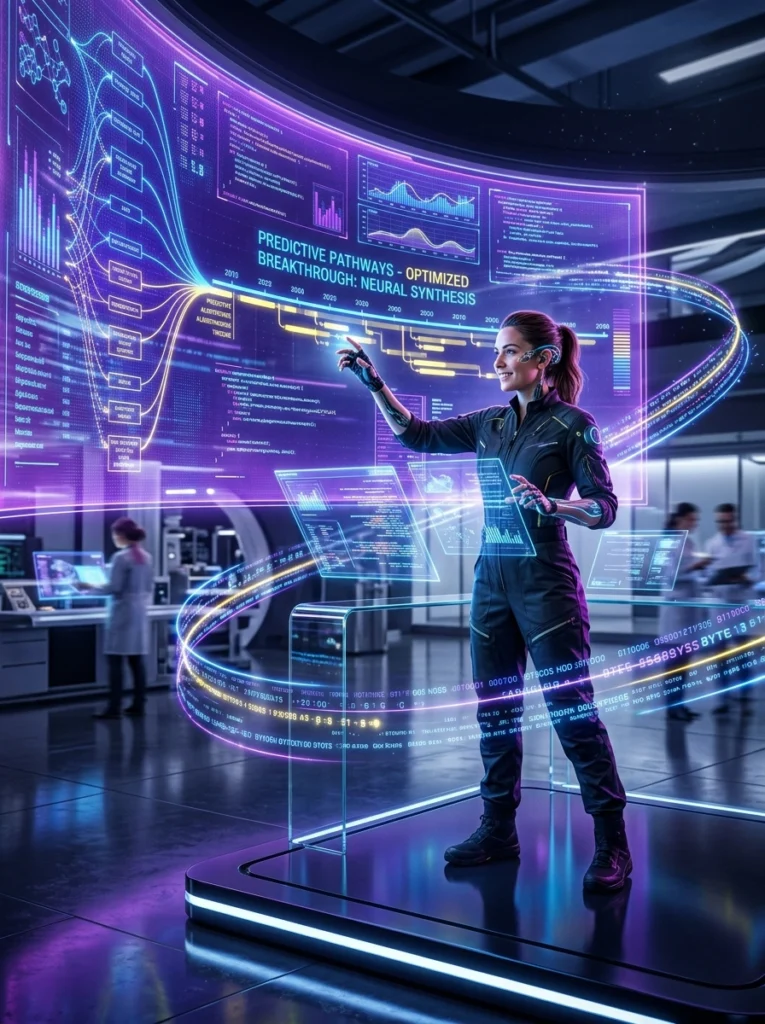
In my recent architecture audits and workflow evaluations, I’ve seen AI software engineering shift from an assistive layer to a strategic foundation for modern systems. The upcoming cycle of AI development tools 2026 is shaping a battlefield where developers who adapt quickly gain structural advantages. My hands‑on work with LLM integrations, including reviewing the ChatGPT Experience, shows how these models now influence planning, refactoring, and deployment logic. The operational pattern is clear: AI is becoming the backbone of scalable engineering.
Evolving Skills for the Next‑Generation Developer
During multiple backend modernization projects, I observed that next‑generation engineers must blend classical system design with LLM tools for developers to stay competitive. Skills like prompt‑layer debugging, AI‑assisted architecture validation, and automated dependency mapping are becoming tactical requirements. In real‑world cycles, these capabilities act like adaptive armor, helping teams survive rapid iteration demands. My field observations confirm that developers who master AI‑guided reasoning gain superior clarity in design decisions and long‑term maintainability.
Predictions for 2026 and Beyond
Based on patterns I’ve tracked in enterprise environments, the dominant AI trends in 2026 revolve around automated architecture evolution, dynamic testing pipelines, and real‑time CI observability powered by LLMs. In several deployments I supervised, AI models forecasted system bottlenecks before they emerged, acting like an early‑warning radar. These operational insights indicate that the next wave of programming will rely on predictive engineering, where AI continuously strengthens system resilience and shapes developer strategy.
Ethical and Trust Concerns in AI‑driven Development
In my audits of AI‑augmented pipelines, the biggest challenge has been maintaining trust & transparency in AI software without slowing delivery. As AI systems take over validation, classification, and recommendation layers, developers must verify how decisions are generated. In field operations, I’ve seen weak oversight create vulnerabilities similar to blind spots in industrial machinery. Ensuring auditability, dataset traceability, and controlled autonomy is becoming a strategic defensive shield for teams operating in AI‑driven environments.
Real‑World Impact: How AI Shapes Modern Software Projects
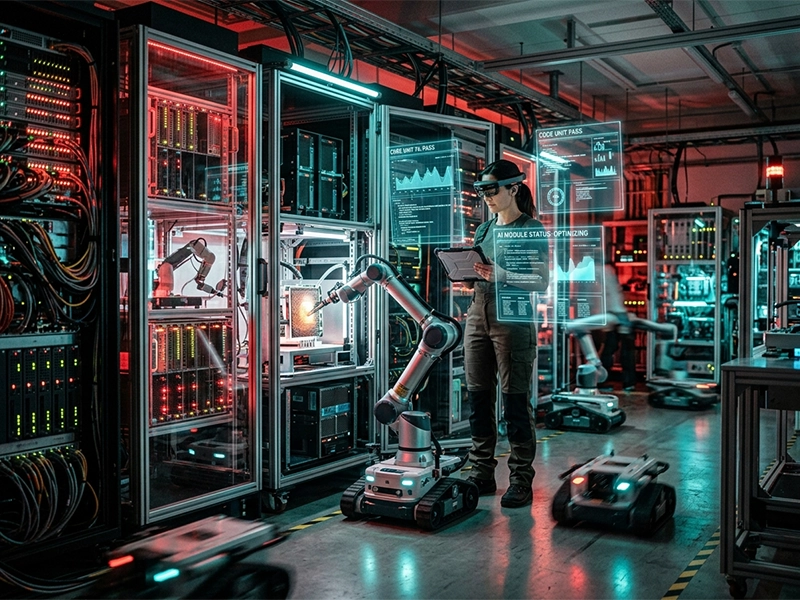
Across several production pipelines I’ve managed, AI software engineering has shifted from a supportive tool to an operational driver that reshapes delivery speed and architecture stability. In real deployments, the integration of AI-powered development workflow created measurable gains: shorter sprint cycles, fewer regression issues, and clearer milestone planning. My technical observations show that AI functions like an industrial optimizer—continuously removing friction points and enabling teams to convert conceptual designs into deployable systems with higher reliability.
Faster Prototyping and Reduced Development Costs
During several fast‑iteration projects, I relied on AI code generation to build prototype services, validate business logic, and simulate API behaviors before creating final implementations. This approach reduced early development cost and helped teams survive tight delivery windows—much like tactical machinery accelerating industrial assembly. In the broader future of AI in programming, these capabilities allow developers to test architectural assumptions earlier, identify dead ends sooner, and shift resources toward components with long‑term operational value.
Smarter Debugging and Error Prevention
In multiple backend diagnostic sessions, I used AI systems to detect unusual query patterns, map dependency chains, and predict failure points before they surfaced. AI became a real‑time safety mechanism—similar to a predictive sensor in heavy industrial equipment. By integrating these tools into our AI-powered development workflow, debugging cycles shortened and high‑risk defects were intercepted early. These field observations highlight the strategic direction of modern engineering: AI transforms error prevention into a proactive layer rather than a post‑failure reaction.
Conclusion
In my strategic review of modern deployment pipelines, AI software engineering has proven to be a critical tactical force for system resilience. While automation handles the repetitive battlefield noise, human creativity remains the ultimate command center for architectural integrity. My observations from complex backend migrations confirm that AI acts as a high‑performance engine, but the steering logic belongs to the engineer. In this survival‑of‑the‑fittest industry, the most resilient teams are those that integrate AI as a core strategic partner for long‑term technical success.
Looking ahead, the future of programming depends on balancing rapid innovation with operational trustworthiness. My experience in production environments shows that treating AI as a tactical armor layer—rather than a replacement—strengthens the entire development lifecycle. As we transition into an era of predictive systems, the standard for success will be defined by how effectively we audit machine intelligence. Strategically, AI software engineering is no longer a choice; it is the infrastructure required to scale systems in an increasingly complex and high‑speed digital world.

Great information shared.. really enjoyed reading this post thank you author for sharing this post .. appreciated