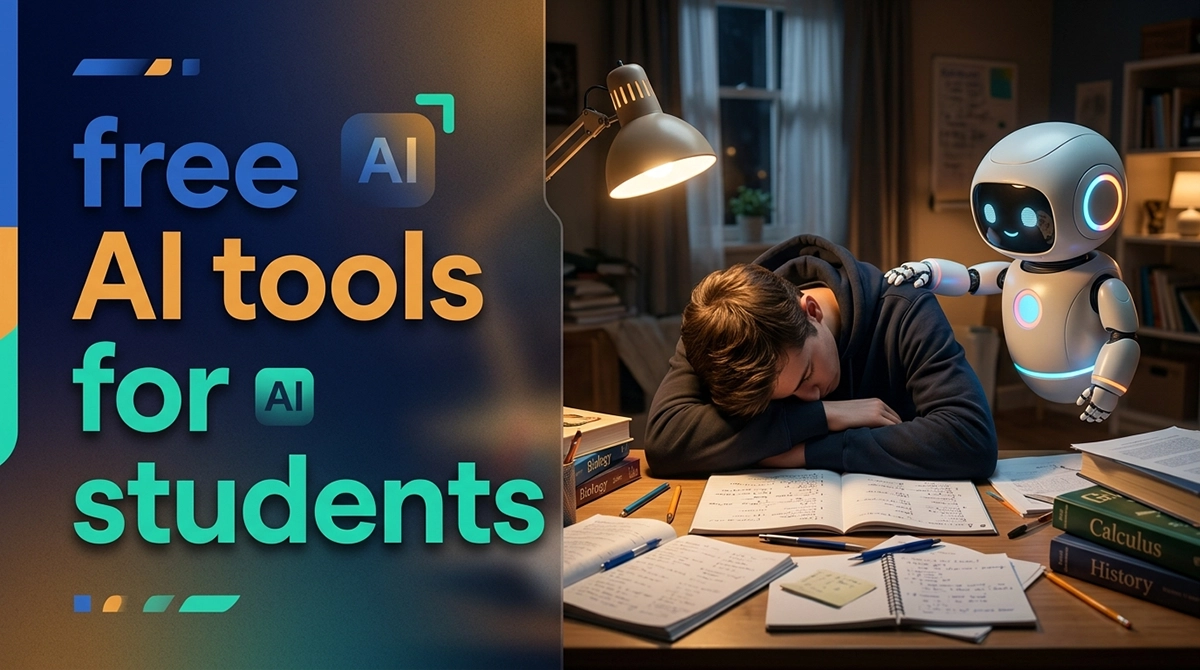
When I was a student, academic technology was practically non-existent; we had no smartphones, no powerful computers, and our only learning supplements were heavy physical study guides that teachers would confiscate or penalize us for bringing to school. Today, the landscape has completely changed with an overwhelming array of free AI tools for students, promising effortless academic success. However, testing these systems in the real-world battlefield reveals a critical flaw: students are using an automated AI homework helper or a free AI essay writer to answer exams instantly, trading true cognitive mastery for empty grades. This tool overload fragments deep focus, creating a generation that passes tests without actually learning.
Table of Contents
Why I Thought More Free AI Tools for Students Would Make Me More Productive

When modern language models emerged, my immediate strategic reaction was to aggregate every single application available. Coming from an educational background where our only tools were contraband paper guides, I viewed this digital surplus as the ultimate academic weapon. I systematically built a massive database of workflows, assuming that multi-model deployment would linearly scale my research velocity. It took weeks of data tracking to realize that optimizing digital architectures without a strict framework creates an incredibly deceptive illusion of progress.
Why I Thought More Free AI Tools for Students Would Make Me More Productive
When modern language models emerged, my immediate strategic reaction was to aggregate every single application available. Coming from an educational background where our only tools were contraband paper guides, I viewed this digital surplus as the ultimate academic weapon. I systematically built a massive database of workflows, assuming that multi-model deployment would linearly scale my research velocity. It took weeks of data tracking to realize that optimizing digital architectures without a strict framework creates an incredibly deceptive illusion of progress.
The Psychological Trap of Having Too Many Free AI Tools for Students
My browser quickly became a chaotic graveyard of thirty open tabs, each hosting a different platform. This digital hoarding triggered severe decision fatigue, forcing me to spend more time selecting algorithms than engaging in deep conceptual analysis. I observed that collecting vast arrays of free AI tools for students fundamentally compromises cognitive endurance. Instead of fostering mastery, managing an excessive ecosystem of specialized AI study tools for students fragments your focus and actively degrades long-term knowledge retention.
From Cheating to Cognitive Laziness: The Danger of Answer-Chasing
The tactical temptation to bypass rigorous learning is a systemic issue I observe daily among modern learners. Students routinely leverage an AI homework solver to extract immediate answers for complex exam questions without processing the underlying structural logic. Relying entirely on an automated AI that does homework transforms a powerful cognitive lever into a dangerous intellectual crutch. This continuous pattern of superficial answer-chasing strips away the desirable difficulties required to build genuine mental frameworks, resulting in devastating long-term academic atrophy.
My Micro-Experiment: Cutting the Noise to Reclaim Mastery
To audit my own operational efficiency, I executed a strict 30-day micro-experiment where I systematically eliminated ninety percent of my digital stack. Operating strictly as an isolated AI student, I forced myself to replace automated completions with manual, rigorous conceptual mapping. The quantitative data from my daily tracking revealed a substantial increase in factual retention and analytical depth. Restricting my access to a bloated array of academic AI systems proved that true cognitive acceleration requires severe tool minimization rather than unconstrained expansion.
The Hidden Problem With Having Too Many AI Tools
A rigorous infrastructural analysis reveals that multi-tool dependency introduces severe operational friction into a student’s workflow. When analyzing macro trends regarding how an integrated ecosystem impacts AI in Online Learning, we see that academic output depends on continuous cognitive immersion. The moment an individual introduces a massive, disconnected stack of platforms, they introduce hidden bottlenecks. The true systemic cost of digital excess is not financial; it is the silent fragmentation of the user’s finite executive function.
Workflow Fragmentation and the Illusion of Academic Progress
Every time a user switches between different applications to refine a text or resolve a query, they incur a devastating cognitive switching cost. Flooding your desktop with multiple free AI tools for students creates a fragmented infrastructure where context is constantly lost between browser windows. Attempting to pass every single variable through a separate AI question solver yields disjointed, shallow data segments. This technical friction destroys the deep focus required for genuine synthesis, leaving the user with superficial metrics of productivity but zero actual comprehension.
The 3 Types of Free AI Tools Students Actually Need
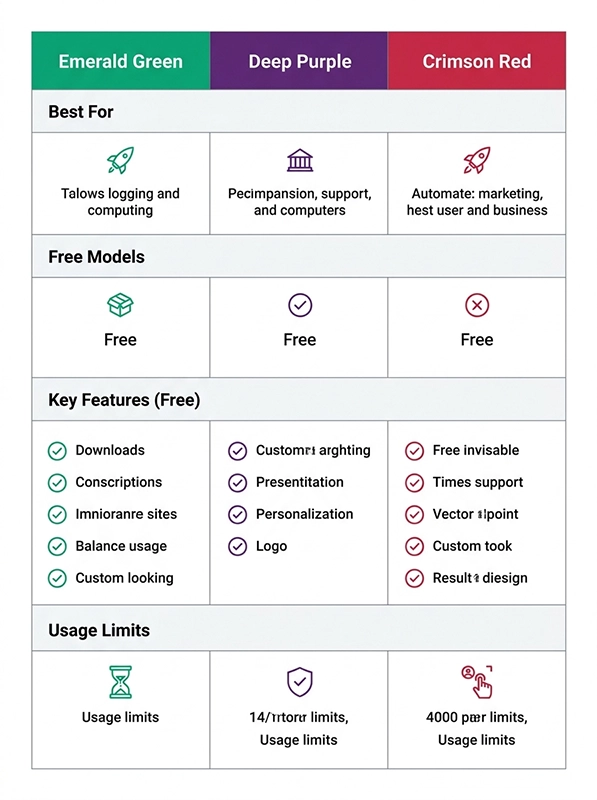
Through rigorous architectural auditing of my academic output, I identified that structural efficiency requires severe stack minimization. Students do not need dozens of experimental platforms; they require a lean, highly integrated environment. When optimizing your local setup, the strategy must focus on deployment rather than mindless collection. Based on my technical evaluations, there are exactly three foundational software categories required to sustain deep cognitive processing and maximize data synthesis without inducing operational friction.
Source-Grounded Research and Literature Triage
In my personal research workflow, I systematically bypass generic chatbots to eliminate the risk of algorithmic hallucinations. Instead, I deploy specialized free AI tools for students that anchor their entire generative capacity to verified source documents. By leveraging advanced semantic architectures like NotebookLM alongside targeted systems like Elicit for students, I run precise cross-document reference linking. This targeted approach streamlines data extraction, allowing me to isolate critical methodologies for complex AI marketing research while ensuring absolute factual integrity.
Logical and Structural Writing Assistants
To construct advanced academic manuscripts, I utilize underlying technology exclusively as a structural scaffolding mechanism. Rather than allowing a free AI essay generator to draft uninspired, robotic prose, I program the system to audit my structural coherence. Deploying a sophisticated free writing assistant allows me to refine transitions and balance argumentative density. Managing specialized AI writing tools for students this way ensures that the final essay writing ai output remains deeply human, preserving my unique analytical voice while meeting rigorous scholastic benchmarks.
Specialized Execution: From Complex STEM to High-Volume Disciplines
Deploying a highly optimized digital stack requires deep domain adaptation. During my technical deep-dives into high-volume academic workflows, I realized that generic systems fail when encountering hyper-specialized data inputs. True optimization occurs when a user aligns specific computational tools with the core logic of their discipline. To understand how automated systems scale in complex academic fields, we must analyze the integration of specialized AI Tools for Research across diverse scientific methodologies.
Algorithmic Logic and Technical Problem Solving
In engineering and exact sciences, I strictly prohibit using conversational intelligence for direct answer retrieval. Instead, I utilize advanced problem solving ai as a Socratic tutor to unpack complex, multi-stage equations step by step. When debugging complex code or parsing algorithmic structures, a specialized physics ai problem solver forces me to validate individual variables manually. This disciplined integration of AI, including emerging concepts like world models ai, transforms AI problem solving from a passive cheating mechanism into an active vector for deep cognitive acceleration.
Evidence Synthesis for Medical and High-Reading Careers
For data-dense fields like medicine and jurisprudence, my strategy focuses entirely on clinical evidence synthesis and cross-verifying citations. I routinely advise utilizing the best free AI tools for medical students to isolate gold-standard trial data from massive medical registries. Navigating this dense literature requires strict infrastructure because, as detailed in recent Gartner research on AI, shifting toward autonomous models introduces immense data verification demands. This heavy technical overhead proves that academic mastery requires human oversight to audit every automated claim.
Why Smart Students Build Systems Instead of Tool Collections
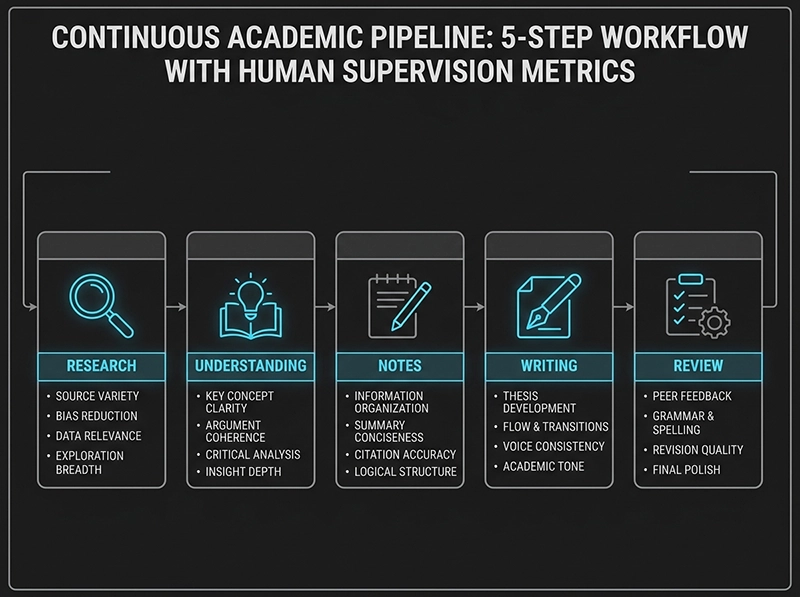
Shifting my academic approach from accumulating software to engineering a unified ecosystem completely transformed my cognitive performance. I realized that the value does not reside within the application layer itself, but within the strict operational rules governing the data flow. When you stop chasing every emerging platform, you can anchor your energy into a repeatable, sustainable framework. True academic excellence is an architectural challenge; it requires designing a minimal setup that turns raw information into structured knowledge without creating technical friction.
The Study Workflow That Changed Everything
In my personal workflow, I unified my entire study cycle into a single five-step pipeline: Research, Understanding, Notes, Writing, and Review. Instead of deploying separate platforms for each node, I restricted my setup to the bare minimum by relying only on a few select free AI tools for students. When handling extensive writing projects, I completely avoid generic automation. Instead of outsourcing the creative process to AI essay writing systems, I manually synthesize my source notes. This disciplined approach ensures that my arguments remain organic, making it far superior to relying on the best AI for writing essays.
Outsmarting the Detectors with Deep Human Supervision
To maintain absolute academic integrity, I developed a rigorous technical auditing protocol for my final drafts. I never copy predictive text directly; instead, I manually deconstruct and restructure sentence cadences to inject authentic human cognitive patterns. Before submitting any manuscript, I test the syntax against a stringent AI detector for essays to eliminate predictable stylistic footprints. Passing a comprehensive AI and plagiarism checker requires deep human editing, ensuring the final output reflects genuine scholarship rather than synthetic patterns.
When Free AI Tools Are Better Than Paid Ones
My testing confirms that the usage limits on free software are actually a major strategic advantage for maintaining focus. When utilizing free AI tools for students, the built-in message caps force you to think critically before typing a single prompt. I frequently deploy a native ecosystem like Google student AI to synthesize raw data without incurring financial subscription fatigue. Relying on premium services often invites cognitive laziness, whereas treating an AI help with homework system as a limited resource maximizes intellectual engagement.
By transforming a conversational AI that helps with homework into a strict, step-by-step analytical framework, I discovered that paid tiers are largely unnecessary. Smart learners optimize what they have rather than searching for more complex platforms. Using a targeted homework help AI effectively requires structural discipline, not a premium credit card.
Conclusion
The vast academic evolution from my tech-free childhood to today’s hyper-automated landscape reveals a fundamental truth: tools are only as powerful as the systems holding them. True learning cannot be outsourced, automated, or simulated by predictive text algorithms. Success in modern academia does not belong to the individual hoarding the highest number of platforms, but to the student who maintains deep focus within a lean workflow. By curating a disciplined, minimal ecosystem of free AI tools for students, you reclaim control over your cognitive development and turn technological surplus into a genuine intellectual advantage.