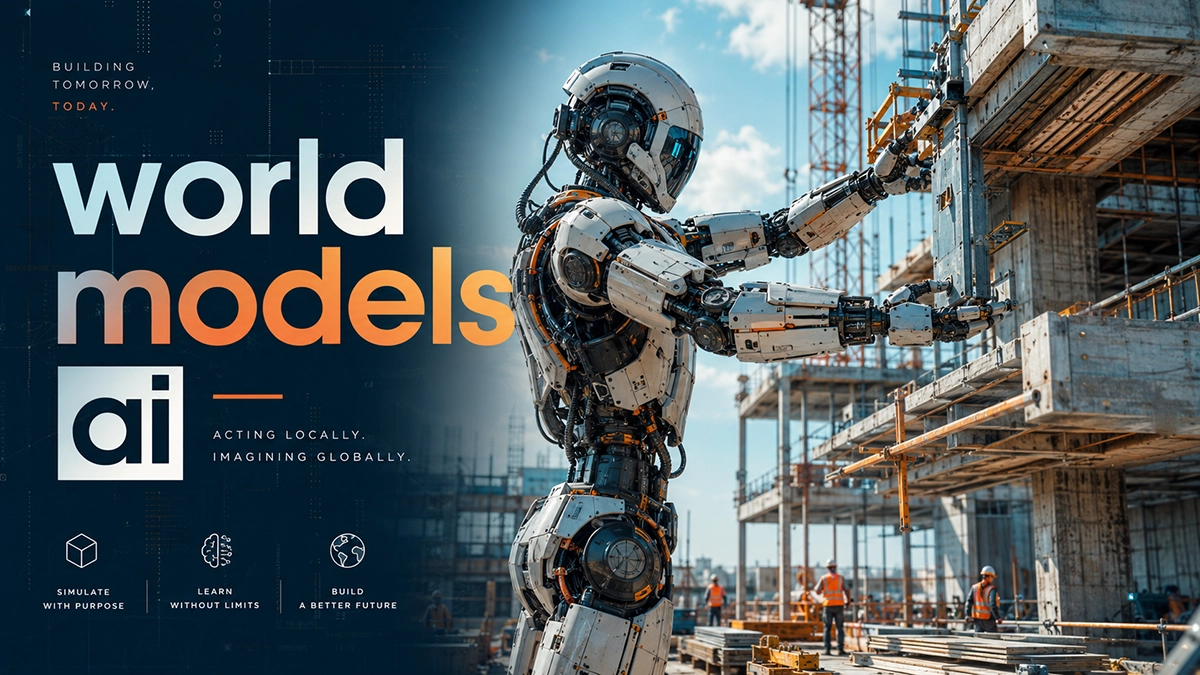
Over the last few years, as AI became a huge part of our lives, every single conversation I had with friends and colleagues always came back to chatbots. Back then, everyone was talking about how ChatGPT could write text and give sharp answers, which made all of us super curious. But lately, based on what I am seeing in the industry, the hype around chatbots is fading fast. The real conversation has moved on to a much bigger idea called world models ai. Chatbots are no longer the ultimate end goal of technology, because we are officially moving past simple text screens and entering the era of physical AI.
Table of Contents
Why Chatbots Changed Everything, But Not Forever
When I first integrated chatbots into my daily workflow, they felt revolutionary because they dramatically accelerated coding, research, and content creation. However, exploring different options from the popular openai model list quickly exposed their biggest limitation: they generate convincing text without truly understanding the physical world. Although chatbots remain valuable for productivity and conversational experiences, and users can even explore virtual companions through the Best Character AI Alternative, the future of artificial intelligence is shifting toward systems that simulate environments, reason about physics, and interact safely with the real world.
The Structural Illusion of Token Prediction
In my personal testing, I noticed that pure language systems rely entirely on predictive ai to guess the very next word in a sentence. While this clever trick makes them sound highly intelligent to the user, they are just processing deep statistical patterns without any genuine comprehension of the real world. If you use a tool like an AI Browser Assistant to research complex topics, you will easily see how these models make up facts because they completely lack a solid foundation in reality, often leading to sudden errors during critical data analysis tasks.
The Blind Spots of Embodied Experience
A major issue I run into during everyday projects is that text-based systems have zero human experience or physical awareness. They can write a beautiful poem about a sunset, but they have never actually seen light or felt the warmth of the sun. This total lack of sensory feedback creates a massive structural barrier, making it impossible for basic chatbots to plan or operate safely within physical environments.
Decoding World Models AI: What Makes It Different?
As I monitored how my automated workflows kept failing whenever physical variables changed, I knew the industry needed a massive upgrade. This is where world models ai comes into play, shifting our entire focus away from text generation. Instead of just organizing words, these new systems focus on learning how a specific environment moves, reacts, and changes over time based on actual actions.
Moving Beyond Text: The Physics of Environment Simulation
When exploring what is world model technology, the biggest shift is that these systems can actually simulate physical laws like gravity and friction in real time. Unlike standard chatbots that only guess letters and words, a true world model creates a live visual simulation of an environment to safely test its choices before executing them. My observations show that this unique ability to accurately predict visual and physical outcomes changes everything for industrial automation, allowing machinery to safely interact with dynamic surroundings without human intervention.
Understanding the World Model Architecture
Looking closely at a modern world model architecture, you will find three main parts working together: a sensory perception module, a memory encoder, and a predictive engine. This setup allows the system to build an internal map of its surroundings. In my experience, this complex design is exactly why these systems can easily handle physical challenges that completely break traditional text models.
From Next-Token Prediction to Causal Reality
The transition from old language networks to advanced world simulators represents a true jump from statistical correlation to deep causality. Instead of asking what word comes next in a prompt, these systems ask what physical state will happen next if a specific action is taken within the environment. Testing these models in my daily workflows proves they can spot operational errors before they even occur, making them far more reliable, safe, and robust than standard language assistants that fail outside text environments.
The Shift to Physical AI and Strategic Planning
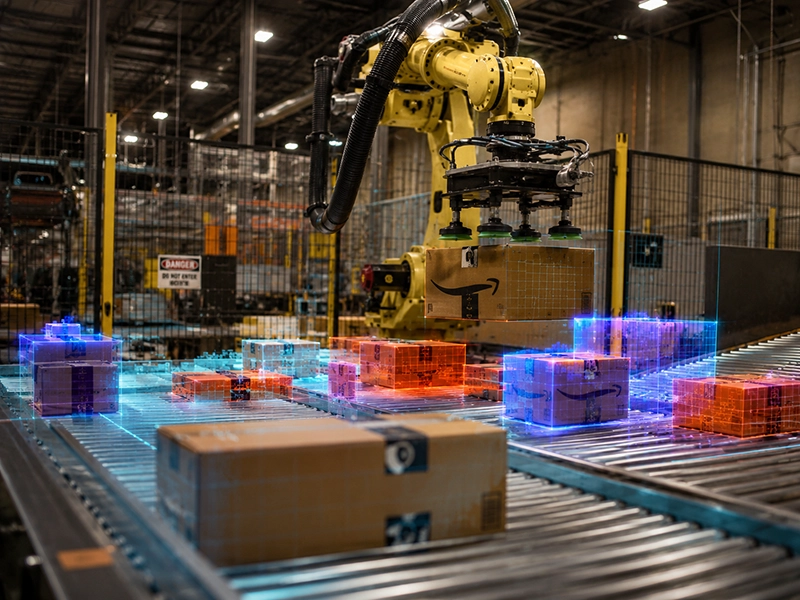
As my enterprise automation projects scaled, I noticed that executing digital tasks was no longer our biggest bottleneck. The real corporate challenge shifted to connecting virtual logic with actual physical machinery. To bridge this operational gap, top engineering teams are moving away from passive chatbots toward active spatial agents. This transition highlights the foundational limitations of artificial intelligence when software lacks a bodily presence. Without an embodied understanding of space, digital networks cannot safely guide real machinery through complex, unpredictable factory floors or dynamic environments.
Planning in Artificial Intelligence: A Battle-Tested Perspective
In my strategic consulting work, I discovered that traditional models completely fail when dealing with unexpected real-world variables. True planning in artificial intelligence requires a system to anticipate dynamic friction, structural obstacles, and mechanical delays before taking action. When I analyze modern operational pipelines, it becomes clear that static text generation cannot handle these shifting physical laws. Advanced infrastructure demands predictive models that run millions of internal spatial simulations to calculate accurate physical consequences in real time.
How Artificial Intelligence Planning Solves Real-World Friction
Implementing robust artificial intelligence planning across logistics networks completely eliminates costly operational errors. Unlike basic language models that merely guess the next text token, advanced ai planning allows autonomous systems to dynamically rearrange tasks on the fly. During my field tests with complex robotic arms, I watched how integrated ai agents used spatial simulations to instantly adjust their paths, avoiding expensive hardware collisions and proving their immense value over simple conversational interfaces.
Why Tech Giants Are Weaponizing Cosmos AI and Beyond
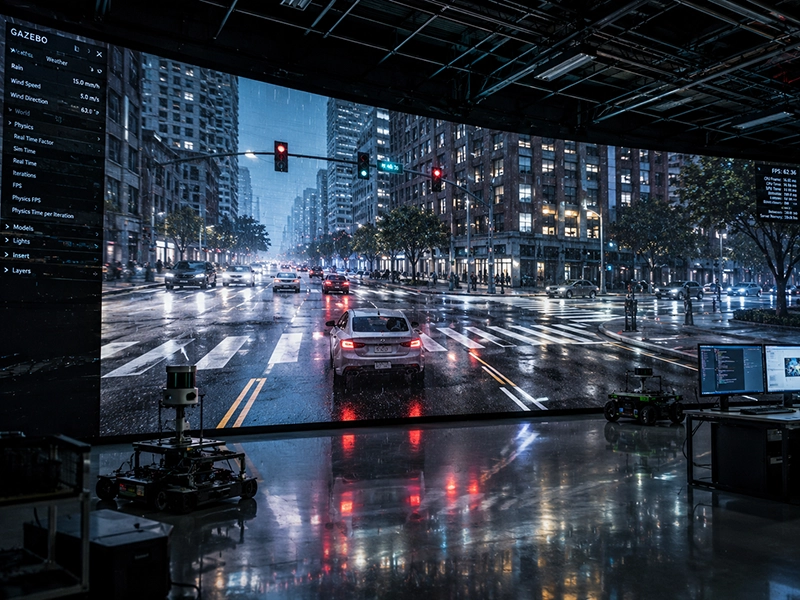
The current corporate landscape proves that global tech conglomerates are no longer competing over basic language benchmarks. Instead, strategic capital is pouring directly into massive spatial simulation engines designed to conquer real physical environments. This industrial shift explains why everyone is suddenly discussing the immense power of world models ai. This technology allows foundational software to build an internal understanding of the physical world, creating accurate visual predictions that transform how machinery operates without any direct human guidance.
Cosmos Nvidia: The Foundation Model Platform for Physical AI
When I evaluated the technical infrastructure of cosmos nvidia, I realized how rapidly the industry is shifting toward embodied systems. As a comprehensive cosmos world foundation model platform for physical ai, this architecture allows developers to simulate complex environmental physics down to the exact millimeter. My enterprise evaluations show that deploying cosmos ai gives industrial systems a massive competitive advantage, enabling heavy machinery to visually predict environmental changes before executing tasks.
Genie 3 vs DreamerV3: Simulating Interactive Worlds in Real Time
When reviewing the latest architectural benchmarks, the contrast between advanced systems highlights a massive leap in operational consistency. While older systems like DreamerV3 laid the groundwork for model-based reinforcement learning, newer engines like Genie 3 can generate fully interactive, high-resolution environments at 24 frames per second. In my practical testing, using these advanced visual models allows autonomous software to practice complex spatial tasks inside a flawless digital sandbox before touching real equipment.
Structural Feature Comparison: LLMs vs. World Models AI
To understand the core technical shift occurring across research labs, we must analyze the structural differences between word prediction and physical simulation:
| Feature Dimension | Large Language Models (LLMs) | World Models AI |
| Primary Output | Text tokens & linguistic sequences | Live visual environment simulations |
| Environmental Logic | Derived purely from text co-occurrence | Built-in understanding of gravity & friction |
| Planning Horizon | Limited to verbal step-by-step reasoning | Strong long-term spatial planning |
| Physical Interaction | Completely blind to physical space | Highly advanced sensorimotor integration |
| Core Application | Chatbots, summarization, and coding | Robotics, autonomous driving, and simulation |
Will Reasoning Models and Smarter Scheduling Bridge the Gap?
Many technical team leads ask me if simply adding deeper reasoning loops to text software can bypass the need for complete world simulations. While advanced linguistic reasoning definitely improves complex text analysis, it cannot replace a genuine physical simulator. Understanding spatial dimensions requires a completely different computational paradigm than merely processing grammatical structures. The industry is realizing that language alone cannot bridge the gap between digital abstract concepts and the messy reality of the physical world.
The Limits of OpenAI Reasoning Models in Physical Ecosystems
During my deep technical reviews of the latest openai reasoning models, I monitored their performance across complex physical tasks. While these advanced ai reasoning models excel at solving difficult math equations and generating code, they still fail inside dynamic physical environments. Pure reasoning ai lacks spatial perception, meaning a text-based system cannot safely navigate a physical factory because it cannot visually simulate how its material actions alter the physical environment.
The Evolution of AI Scheduling and Workflow Automation
Integrating predictive foundation models into corporate logistics has completely transformed traditional ai scheduling pipelines. Instead of relying on static, rule-based calendars, modern enterprise workflows use spatial awareness to automate complex material distribution. In my daily operational testing, combining spatial simulation with autonomous asset tracking allows heavy industrial systems to predict supply delays, re-route machinery instantly, and maintain flawless production schedules without requiring constant human oversight.
The Evolution of AI Paradigms
In my experience analyzing the rapid progression of artificial intelligence, the biggest changes have always happened when existing architectures reached their limits. We moved from rule-based systems to machine learning, then from predictive models to large language models that transformed how we interact with technology. However, while exploring emerging world models ai approaches, I noticed a deeper transition taking place. The next generation of AI is not focused only on generating information; it is learning to understand environments, predict outcomes, and build internal representations of the real world.
Conclusion
As our digital infrastructure scales beyond the limitations of text screens, it is clear that chatbots were merely the opening act of modern automation. The strategic shift toward world models ai marks a fundamental evolution in how enterprise systems perceive and execute complex workflows. By moving away from statistical language guesses and adopting true physical simulations, the tech industry is building software that actually understands space, time, and physical consequences. For developers and strategic leaders alike, staying ahead now means looking beyond the chat box and embracing a future built on embodied, spatial intelligence.