Over the past year, I’ve tested several AI writing tools while building marketing content, blog posts, and SEO pages for real projects. Naturally, the Jasper AI vs Copy ai debate kept coming up whenever I needed fast drafts or polished copy. Both tools promise to be among the best AI writing tools, but they actually feel very different in real workflows. Instead of repeating feature lists, I wanted to see how they perform when creating blog articles, ad copy, and marketing content under real deadlines. This comparison reflects what I noticed while using these AI content creation tools in everyday content work.
Table of Contents
Jasper AI vs Copy ai: Quick Verdict for Marketers
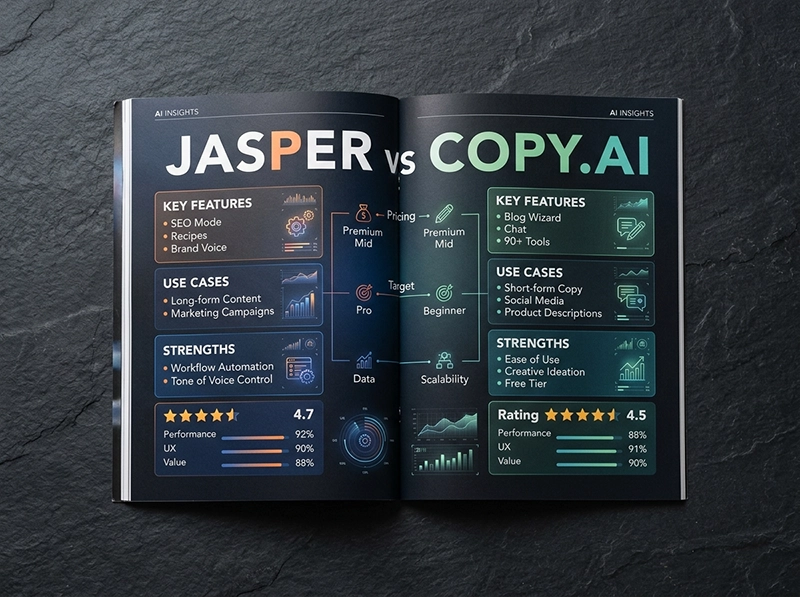
When I started comparing jasper ai vs copy ai, I didn’t approach it as a casual tool review. I tested both while writing landing pages, blog articles, and marketing emails for real projects where deadlines and SEO performance actually mattered. Over time, I noticed that the difference between these tools isn’t just about features; it’s about workflow. One feels like a structured marketing assistant, while the other behaves more like a fast brainstorming partner. That distinction became obvious once I began using them daily for content production and campaign planning.
When Jasper AI Makes More Sense
In my experience, Jasper becomes more useful when content needs structure, consistency, and a clear marketing angle. I often used it when writing SEO articles or building landing page drafts where tone and messaging had to stay aligned with a brand voice. Compared with many ai tools for content marketing, Jasper felt more deliberate and guided. Its templates and long‑form workflows helped me organize ideas faster, especially when creating outlines or expanding keyword clusters. For projects where clarity and conversion mattered, it behaved more like a strategic writing assistant than just another content generator.
When Copy ai Is the Better Fit
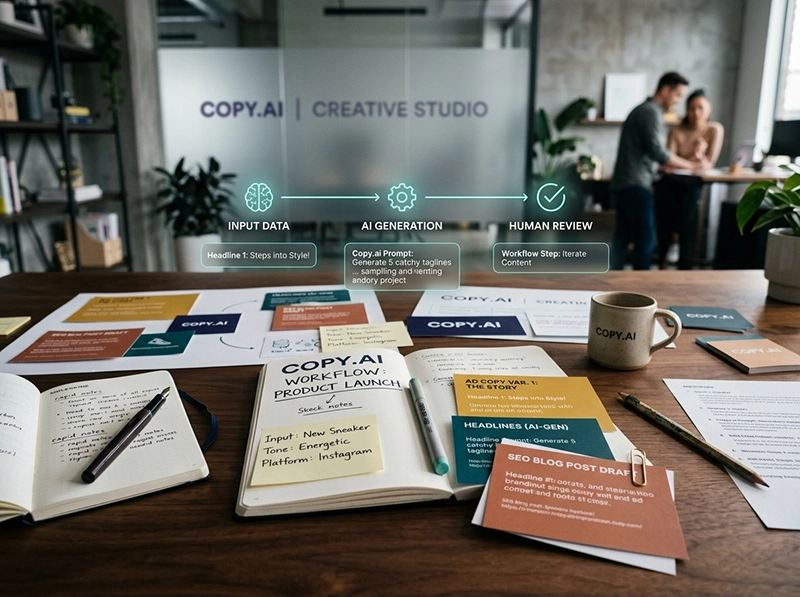
Copy.ai felt very different in my daily workflow. Whenever I needed quick ideas, headline variations, or rough drafts for social media and ads, it moved much faster than heavier tools. The interface is simple, and even the free ai writing assistant plan can generate plenty of ideas before you commit to a paid workflow. I often used it during early brainstorming sessions, especially when testing hooks or angles. Interestingly, some of the same students and indie creators who look for Free AI Tools for Students would probably find Copy.ai’s lightweight approach easier to start with.
How I Tested Both AI Writing Tools in Real Workflows
Instead of relying on feature comparisons, I wanted to see how these tools behave inside an actual content workflow. Over several weeks, I used them while planning blog posts, generating ad copy, and drafting SEO content outlines. This approach helped me understand how copy ai vs jasper ai performs under realistic conditions, not just controlled demos. Writing speed mattered, but so did clarity, editing time, and how well each tool handled different types of content. Those practical details usually reveal more than any marketing feature list.
My Testing Criteria
When comparing these platforms, I focused on a few practical criteria that matter in real content production. I tested how each tool generates outlines, expands ideas, and supports long‑form drafts for blogs and landing pages. Tools that claim to be the best ai content generator should handle more than short snippets; they need to assist with structure, tone, and flow. I also checked how easily the outputs could be edited into publishable content without rewriting everything from scratch.
What I Looked for Beyond Speed
Speed is impressive at first, but it’s rarely the most important factor in professional writing. During my tests, I paid more attention to clarity, coherence, and how much editing each draft required. Some tools can produce text quickly but leave you with heavy rewriting later. The best ai for writing should reduce friction, not create more work. I also evaluated how well each system handled different prompts, from structured blog outlines to creative marketing angles.
Why Human Editing Still Matters
Even with advanced AI content creation tools, the final quality still depends on human judgment. In my workflow, AI usually handles the first draft, while I refine structure, tone, and factual clarity. This combination saves time without sacrificing quality. Many best ai tools for content creation can accelerate research and idea generation, but they still need editorial direction. Treating them as collaborators rather than replacements tends to produce stronger content and more reliable SEO performance.
Content Quality, Copywriting, and Long-Form Performance
After testing both tools across real client work, I realized content quality is where the differences become easier to feel than to describe. On paper, both platforms look capable, but daily use tells a more honest story. I used them while building blog posts, landing pages, email sequences, and internal content drafts, often under tight deadlines. That made it easier to judge not only output speed, but also clarity, structure, and how much cleanup each draft needed before it could be published or handed to a team member.
Blog Posts and SEO Articles
When I used these tools for blog posts and search-focused articles, the biggest difference showed up in structure and paragraph flow. Jasper usually gave me cleaner outlines and stronger transitions, which saved time during editing. Copy.ai was faster for idea generation, but the drafts often needed more manual shaping before they felt cohesive. In my own workflow, that mattered a lot because I was not just drafting content; I was building pages designed to rank, hold attention, and reflect editorial intent. Among many best ai writing tools, that distinction becomes important very quickly.
Ads, Emails, and Landing Page Copy
For shorter conversion-focused assets, the gap felt narrower, but the style difference was still obvious. Copy.ai often helped me move faster when I needed headline options, email hooks, or quick campaign variations. Jasper, on the other hand, usually produced messaging that felt more aligned with funnel logic and broader positioning. I noticed this while writing launch emails and landing page sections for products with multiple audience segments. If your work depends on testing angles quickly, ad copy ai and copywriting ai features can help, but strategic polish still matters more than raw speed.
Ebooks, Manuals, and Longer Drafts
Longer drafts exposed the strengths and weaknesses of both platforms much faster. I tested them while outlining educational guides, internal process documents, and long-form lead magnets, and that is where jasper ai vs copy ai became less about features and more about endurance. Jasper stayed more stable across longer sections, especially when I needed consistent tone and a logical sequence. Copy.ai still helped during brainstorming, but it became less reliable as the draft expanded. If you are creating something like an ebook or structured documentation, consistency matters more than a flashy first paragraph.
SEO, Brand Voice, and Marketing Use Cases

In real content operations, generating words is only part of the job. What matters more is whether the tool helps shape content that matches search intent, sounds on-brand, and fits different marketing formats without turning every draft into a cleanup project. I paid close attention to that because most of my testing happened inside real workflows, not isolated experiments. The question was never just which tool writes more. It was which one helps produce content that can survive editing, perform in search, and stay useful across campaigns and content systems.
SEO Control and Search Intent
From an SEO perspective, I found Jasper easier to guide when I already knew the page goal, search intent, and content hierarchy. It handled structured prompts better and gave me drafts that were easier to optimize around headings, semantic relevance, and internal linking. Copy.ai was useful for generating angles and alternative phrasing, but it needed more intervention when the page had a specific ranking purpose. That difference matters if you build content strategically. It also explains why many teams exploring Chatgpt alternatives eventually compare specialized tools built for repeatable marketing workflows.
Brand Voice and Consistency
Brand voice was one of the most practical differences in my testing. When I worked on pages that needed to sound steady across blog content, emails, and landing copy, Jasper was usually easier to steer toward a consistent tone. Some of that came from workflow design, and some of it came from how I could shape prompts over time. While reviewing Jasper AI features, I found that the real advantage was not novelty but repeatability. For ongoing campaigns, the best ai tool for marketing content is often the one that creates fewer tone mismatches during editing.
Pricing, Free Plans, and Business Value
When comparing Jasper AI vs Copy ai, pricing only makes sense when you connect it to real output. I did not evaluate these tools as isolated subscriptions. I tested them inside my actual workflow, where content quality, editing time, and production speed directly affect business value. In practice, the cheaper option is not always the one that saves more money. If a platform creates extra cleanup work, the hidden cost shows up later. That became clear to me after using both tools across blog production, landing pages, and campaign drafts.
Jasper AI Pricing in Context
My view of jasper ai pricing changed when I started measuring it against how much time I saved in editing. In the Jasper AI vs Copy ai comparison, Jasper felt easier to justify whenever I was working on long-form SEO content or structured marketing pages. I personally noticed this during busy weeks when I had to publish quickly without sacrificing tone or clarity. For light ideation, the price can feel high. But when the draft quality reduces revision time, the monthly cost becomes easier to defend against many jasper ai alternatives.
Copy.ai Free Plan and Paid Plans
One reason many people test Copy.ai first is the accessibility of copy ai free. In the wider Jasper AI vs Copy ai discussion, this is one of Copy.ai’s strongest entry points. I used the free version when I needed headline ideas, email variations, and quick ad concepts without committing to a deeper tool right away. As a free ai writing assistant, it works well for experimentation and early-stage workflows. In my own use, though, once content needed stronger consistency or depth, the free experience stopped being enough for serious publishing work.
Best Value by User Type
The real answer to value depends on what kind of work fills your calendar. In my own Jasper AI vs Copy ai testing, I found Copy.ai more useful for quick-turn content, while Jasper made more sense for SEO pages, structured articles, and brand-sensitive drafts. That difference mattered because I was not just testing features for fun. I was using them in real production where delays create downstream problems. For teams comparing the best writing ai or the best ai tools for marketing content, the smartest choice depends on workload, format, and tolerance for editing.
The Broader Shift Behind These Tools
The more I worked with Jasper AI vs Copy ai, the more I saw a larger pattern behind AI writing tools. They do not simply produce drafts faster; they change where human effort is spent. That is why the topic Artificial Intelligence Replace Jobs fits naturally into this conversation. From my own experience, the repetitive parts of writing shrink first, but the strategic parts become more important. When I rely on these tools in real work, I spend less time drafting from scratch and more time making decisions about intent, structure, accuracy, and voice.
Conclusion
After using both tools across real projects, my view on Jasper AI vs Copy ai became much more practical than theoretical. Jasper worked better for my longer blog posts, SEO-driven pages, and content that needed a more consistent brand voice, while Copy.ai helped me move faster when I needed short-form copy, ad variations, or quick campaign ideas. In my experience, neither tool is universally better in every situation. The right choice depends on your workflow, the type of content you publish, how much editing you can tolerate, and whether speed or structure matters more in your daily process.