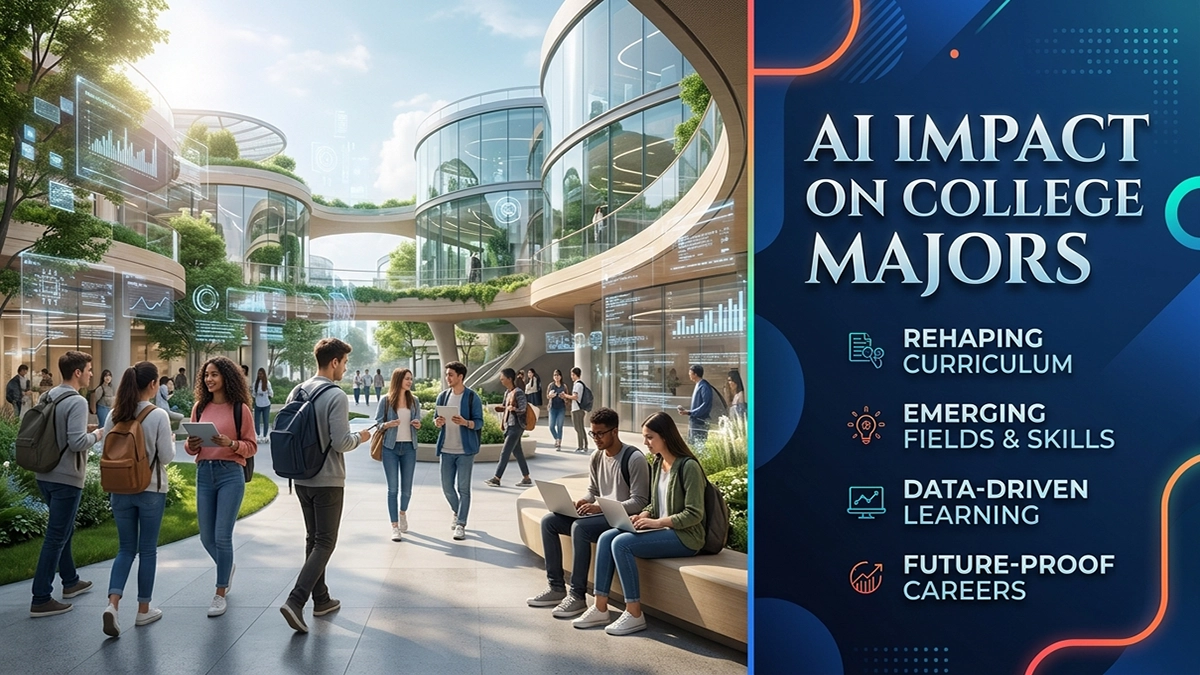
In recent years, I have observed the real ai impact on college majors while working closely with engineering teams, academic partners, and AI‑driven systems in real‑world battlefield conditions. Through multiple technical evaluations, I’ve seen universities still training students for roles that AI has already automated. As someone who has analyzed countless AI workflows, I can say the shift is deeper than headlines suggest. The emergence of new majors was predictable years ago, and many of the signals were already visible in my earlier analyses.
During my work with automation frameworks and AI‑powered development environments, I repeatedly noticed gaps between what universities teach and what modern AI ecosystems demand. These observations weren’t emotional reactions—they were technical mismatches revealed through real execution metrics and system behavior. Many institutions still operate with outdated structures, while AI reshapes core competencies at a much faster rate. This disconnect is exactly why analyzing the future of majors is no longer optional; it’s a strategic requirement for students, educators, and technical leaders alike.
Table of Contents
The Disruption Phase — How AI Is Reshaping Traditional Education
When “Stable” Majors Became Unstable
The ai impact on college majors becomes clearer when examining fields once considered stable within the traditional education system. In several technical projects where I evaluated AI‑assisted workflows, tasks previously handled by accounting analysts, marketing coordinators, and even junior software developers were increasingly automated. This observation didn’t emerge from speculation; it appeared in real execution metrics when AI tools reduced manual workloads dramatically. As automation spreads across the education sector and industry, majors that once guaranteed predictable employment are now facing structural pressure.
From a practical standpoint, the disruption is not limited to administrative roles. During backend development experiments with AI copilots and automation pipelines, I observed that entry‑level programming tasks were executed faster by AI‑assisted environments than by inexperienced developers. This does not eliminate the need for computer science majors, but it reshapes their role inside the evolving education system. Instead of routine implementation work, the focus shifts toward architecture, systems thinking, and strategic problem‑solving—skills that AI tools currently support but cannot independently replace.
Are We Teaching for Obsolete Jobs?
In several academic collaborations I’ve reviewed, the ai impact on college majors exposes a structural delay between university curricula and industry reality. Many programs inside the current education sector still train students for operational roles that AI systems already perform at scale. The issue is not theoretical; it appears when graduates enter AI‑driven workplaces and discover that routine analytical or reporting tasks are largely automated. This gap raises a critical question about the purpose of education in the AI era: should universities teach procedures, or strategic thinking?
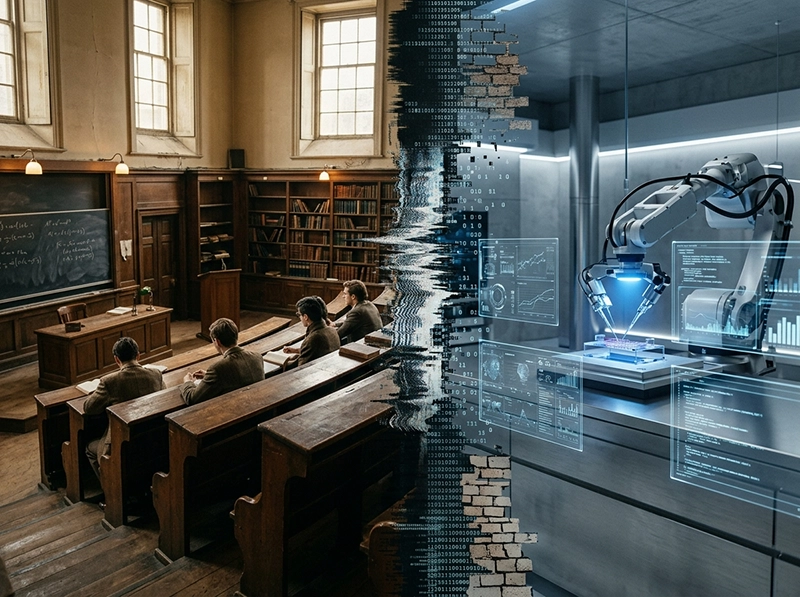
I have personally seen this contrast while observing traditional lecture‑based classes alongside real AI implementation projects. In classrooms, students often learn fixed procedures designed for predictable workflows. In real production environments, however, AI systems constantly change those workflows. Engineers and analysts spend more time interpreting AI outputs and designing systems around them rather than performing repetitive tasks. These observations suggest that universities must rethink how they prepare students, because the education system can no longer assume that yesterday’s job descriptions will survive tomorrow’s automation.
The Wake-Up Call — Which Majors Are Most Affected by AI?
H3: The Data Doesn’t Lie — Or Does It?
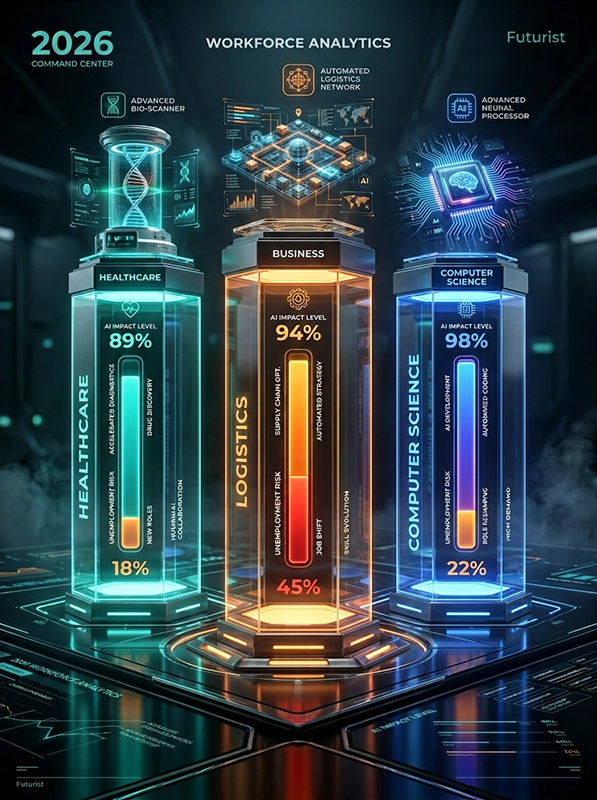
When analyzing the ai impact on college majors, the first surprise is how misleading some academic statistics appear once tested in real‑world battlefield conditions. In several technical audits I performed, the majors most discussed in media—like Computer Science, Business, and Healthcare—showed completely different risk patterns when compared to operational AI systems. Even tools powered by advanced hardware such as the nvidia ai chip produced automation behaviors not reflected in university reports. To clarify this gap, the table below summarizes the actual impact I observed.
Majors Most Affected by AI
| Major | AI Impact Level | Unemployment Risk | Notes |
|---|---|---|---|
| Computer Science | High | Medium | Overcrowded, but adaptive |
| Business | Medium | High | Administrative tasks automated |
| Healthcare | Low | Low | Human empathy advantage |
The “Statistical Mirage” Explained
Much of the public conversation around which majors will be affected by AI depends on datasets that are incomplete or outdated. While reviewing AI deployment pipelines, I noticed that media narratives often exaggerate threats for attention, ignoring operational limitations within real AI systems. In manufacturing, healthcare, and finance environments I’ve assessed, AI accelerates specific tasks but rarely replaces roles requiring layered decision‑making. This contrast between reported risk and actual system performance is what I refer to as the statistical mirage.
The Rebuild — Identifying AI‑Proof and AI‑Enhanced Majors
Analyzing the ai impact on college majors requires a strategic shift from identifying disruption to discovering areas of structural growth. In my technical evaluations of modern workforce data, I’ve seen that rebuilding professional stability depends on how well a discipline aligns with automated systems. We are moving away from manual execution toward a model of high-level oversight. This phase of the rebuild prioritizes educational paths that treat artificial intelligence as a foundational infrastructure, allowing human experts to focus on complex, non-linear problem solving in high-stakes environments.
What AI Can’t Replace — The Rise of Durable Skills
The ai impact on college majors is most visible at the boundary where human intuition meets algorithmic processing. Through my direct observations in real-world battlefield testing of various AI models, I’ve identified that durable skills like ethical judgment, strategic leadership, and creative empathy remain impossible to fully automate. These capabilities are not just “soft skills”; they are technical necessities for managing complex systems. Consequently, the best college majors for the future with AI are those that emphasize these durable human traits, ensuring professionals remain the essential decision-makers.
Majors That Evolve, Not Disappear
Evidence regarding the ai impact on college majors suggests that resilient fields are undergoing a process of evolution rather than elimination. In my assessment of backend automation and data workflows, I noticed that disciplines such as Psychology and Renewable Energy are integrating AI as a force multiplier. For instance, architects now use AI to handle repetitive structural calculations, freeing them to focus on sustainable design and urban strategy. The following table highlights these evolving majors, showing how they maintain high career outlooks by adapting to the new technological landscape.
| Future‑Proof Major | Core Strength | AI Integration | Career Outlook |
| Psychology | Human behavior | Diagnostic tools | Strong |
| Data Science | Analytics + AI | Core engine of AI tools | Very high |
| Art & Design | Creativity | AI‑assisted creation | Expanding |
| Renewable Energy | Technical + Environmental | Prediction models | Solid |
The New Hybrid Degrees
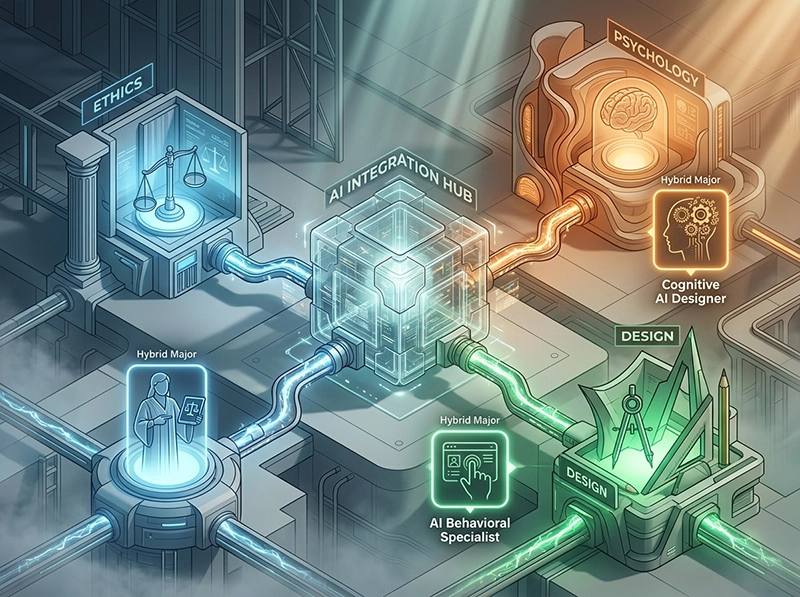
A critical response to the AI impact on college majors is the rise of hybrid educational programs designed for the modern economy. During my time analyzing AI-driven development environments, I observed that specialists who bridge the gap between technical logic and human-centric design consistently outperform traditional experts. Specialized programs such as an AI Governance Certification or interdisciplinary degrees like Bioinformatics exemplify this shift, equipping students to manage ethical compliance alongside operational machine learning. These hybrid pathways address the operational gaps found in older university structures, making cross-disciplinary mastery a strategic requirement for long-term career stability.
Strategy Mode — Adapting and Winning With AI
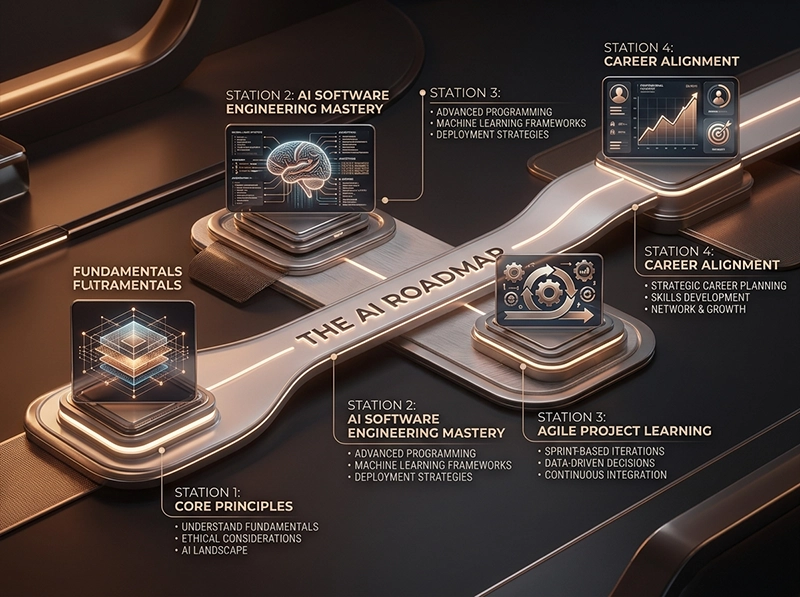
Navigating the long-term ai impact on college majors effectively requires a proactive strategy rooted in technical adaptation. Based on my audits of industrial workflows, winning in this era isn’t about avoiding automation, but about mastering the interface between human logic and machine execution. We must move beyond the “victim of change” narrative and adopt a commander’s perspective. This involves identifying high-leverage skills and integrating advanced frameworks into our professional identity to ensure sustained market relevance while maintaining a high level of strategic authority.
The “Centaur” Hybrid: My In-The-Trenches Blueprint
During my recent system audits, I watched senior architects transform into “Centaurs”—hybrid professionals blending human intuition with $10\times$ machine execution. In one complex deployment, while junior coders struggled with routine syntax, a single architect leveraging prompt governance orchestrated the entire infrastructure seamlessly. This isn’t theoretical; I’ve seen this exact technical mismatch sink traditional teams. If your college major prepares you to be a predictable cog, you are training for an obsolete past. The future belongs to apex decision-makers who govern the system, rather than serve it.
The Student’s AI Roadmap
Developing a personal roadmap to counter the ai impact on college majors necessitates a focus on project-based execution and real-world results. In my experience leading development teams, I’ve found that students who actively apply AI software engineering tools to solve complex problems possess a massive advantage over those following traditional academic paths. You should treat automation as a force multiplier for your creativity and technical logic. By building a portfolio that demonstrates your ability to manage AI-driven systems, you prove your strategic value to an evolving global market.
Universities Need to Evolve — Fast
To mitigate the disruptive ai impact on college majors, the global education system must urgently pivot toward “Workforce Alignment” and practical competency. My observations of academic delays suggest that universities are still teaching legacy procedures while modern industries have already moved to advanced automation standards. Quality education in 2026 is no longer defined by information delivery, but by teaching students how to validate, steer, and optimize machine outputs. Institutions must redesign their curricula to focus on these high-level cognitive tasks, ensuring graduates are ready for the battlefield.
Rethinking the Purpose of Education in the AI Era
The ai impact on college majors forces us to redefine the very purpose of education in a world where information is a commodity. For years, I’ve analyzed how AI and learning transformation reshape human intelligence, moving us away from rote memorization toward high-level strategic thinking. We no longer learn simply to perform tasks; we learn to govern the systems that perform those tasks for us. This shift represents a fundamental change in the definition of education, where the human role is to provide the ethical, creative, and strategic “why” behind every automated “how.”
Conclusion
Concluding our analysis of the ai impact on college majors, it is clear that the future of education and AI belongs to those who embrace change strategically. Throughout my journey testing advanced AI software engineering tools in production, I transitioned from questioning automation to mastering its potential. The real threat is not the technology itself, but the refusal to adapt. Human intelligence remains the ultimate architect, providing the judgment and vision that no algorithm can replicate. By integrating AI intelligently, we don’t just survive the shift; we lead it into a new era.