I still remember when ChatGPT launched and suddenly everyone was talking about the massive leap in AI development. Like many others, I jumped right in, using it to speed up my coding and optimize my daily technical workflows. But as I kept following industry updates and global enterprise trends, my focus shifted. I kept seeing major corporate job posts practically demanding an ai governance certification. It hit me that the real challenge today isn’t just about building faster models; it is about managing them responsibly without breaking laws or losing user trust.
This realization changed how I looked at the tech landscape. Companies are no longer just looking for developers who can write prompts; they want professionals who understand data security, ethics, and corporate risk mitigation. Diving into this field made me realize how fast things are shifting, prompting me to look for the best free ai courses for beginners to bridge the gap between technical building and strategic oversight.
Table of Contents
The Shift from Power to Accountability: Why the Market Changed

Back in 2023, if you asked enterprise executives about their biggest AI concerns, most answers revolved around speed and deployment. Everyone wanted to know how to integrate models faster than their competitors. However, my observations of recent enterprise trends show that the core questions have completely shifted. Today, corporate boards are asking who takes responsibility for an automated decision, where sensitive operational data is stored, and whether their workflows comply with evolving global legal regulations. The sheer velocity of AI development has moved far quicker than corporate guidelines, creating a chaotic strategic vacuum that traditional IT setups simply cannot handle.
The Velocity of AI vs. The Slowness of Regulation
This regulatory gap became personally obvious to me as I watched companies scramble to balance innovation with compliance. While studying these shifts, I noticed how closely this algorithmic chaos mirrors older digital challenges, like keeping up with rapid Social Media Trends where public adoption always outpaces security policies. In the enterprise AI battlefield, tech capabilities expanded overnight while official legal frameworks took months to draft. This massive operational mismatch is exactly why modern organizations are suddenly forcing their strategic staff to acquire an ai governance certification to manage severe liabilities.
Real-World Vulnerabilities: Data Leaks and Algorithmic Bias
In my own analysis of recent corporate failures, the risks are no longer theoretical. I have watched major firms suffer massive setbacks because employees mistakenly uploaded confidential source code directly into public large language models. Furthermore, automated hiring systems began showing undeniable algorithmic bias, creating severe reputational damage. These incidents prove a critical point: modern enterprises are actually terrified of how untrained humans interact with autonomous systems. To mitigate these specific corporate disasters, companies are aggressively prioritizing advanced ai security certifications to safeguard their sensitive data pipelines.
Deciphering the Professional Credentials: Top Industry Standards
When enterprises realized that deploying powerful models without strict boundaries was an existential threat, the hiring market adapted. Companies stopped scouting exclusively for technical prompt builders and started searching for professionals who could design operational risk policies. As I dug deeper into available market solutions, I discovered a specialized credential ecosystem designed to address this corporate anxiety. Understanding these frameworks is essential because modern risk management requires a structured vocabulary that bridges the massive gap between raw software engineering and high-level corporate oversight.
Structural Integrity: The IAPP AIGP Framework
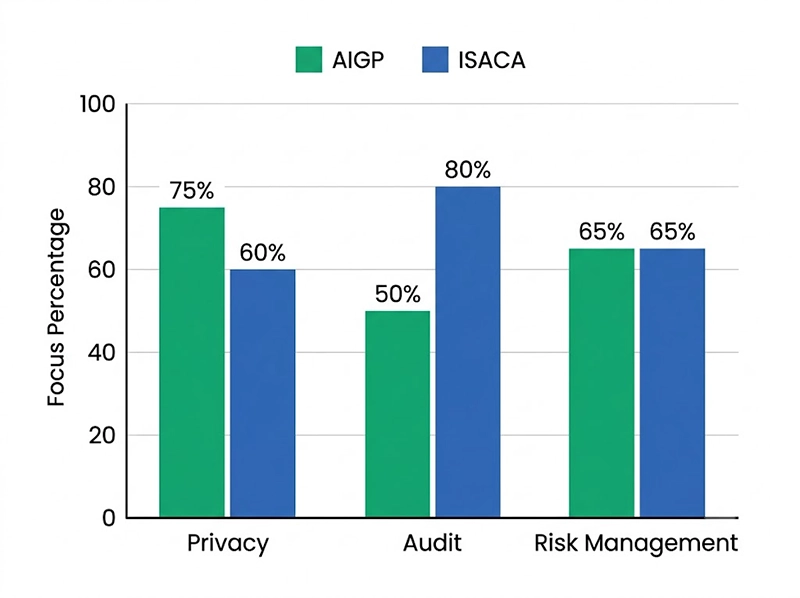
My deep dive into these programs revealed that the Certified Artificial Intelligence Governance Professional (AIGP) track is currently leading the industry. What sets this specific program apart is its unique operational focus; it completely ignores model training to prioritize ethical deployment lifecycles. If you pursue an ai governance professional certification, you are trained to establish comprehensive institutional guardrails. This track is ideal for compliance officers and privacy leads who need to translate complex legal boundaries into practical, everyday corporate strategies.
Risk and Assurance: ISACA’s Specialized Audit Path
While the IAPP path handles high-level policy, my technical research indicates that ISACA’s upcoming framework offers an entirely different layer of operational security. For professionals managing internal controls, risk mitigation, and compliance, traditional network auditing is no longer sufficient. Achieving an artificial intelligence governance professional certification through an audit-centric lens means ensuring that autonomous decisions are fully traceable and explainable to external regulators. It provides the deep analytical tools required to inspect black-box algorithms and verify enterprise data integrity.
The Legal and Ethical Imperative for Modern Enterprises
Ultimately, investing in these structured programs is about establishing corporate defensibility in a highly regulated market. From my perspective, having certified personnel on an enterprise team sends a powerful signal to investors and regulators that the organization treats data protection seriously. As global penalties for algorithmic non-compliance intensify, these industry credentials will transition from competitive advantages to baseline operational mandates. Organizations must build true cross-disciplinary competence, combining engineering awareness with ethical oversight to survive the next phase of the digital era.
Evaluating the Corporate Investment: Costs vs. Practical Value
When I decided to explore professional credentials deeper, I realized that understanding corporate risk requires analyzing the actual financial commitments involved. Many strategists ask if these expensive programs genuinely deliver enterprise value or if they are just high-priced corporate badges. From my operational perspective, we must look past the initial marketing and evaluate the real return on investment. Organizations need to decide whether paying heavy upfront fees will truly protect their systems from long-term legal liabilities or if practical hands-on experience remains the ultimate gold standard for modern tech leadership.
Breaking Down the Financial Entry Barriers
When researching specific industry pricing, I discovered that entering this field requires a substantial financial commitment. For example, looking closely at the aigp certification cost, individuals must spend anywhere from $649 to $1,195 just for exam registration and basic membership materials. While completing an official ai governance course provides an excellent baseline vocabulary, I often analyze these costs against the actual operational skills gained. Spending thousands on premium programs only makes sense if the framework directly helps you secure enterprise data pipelines and mitigate real-world corporate vulnerabilities.
Technical Alignment: Implementing Security Foundations in AI Governance Certification

Transitioning from standard software development to corporate oversight made me realize that high-level policies mean absolutely nothing without solid technical foundations. True compliance cannot exist in a vacuum; it must be deeply integrated into our everyday architectural frameworks and engineering workflows. Strategists must understand how backend infrastructure, data access controls, and automated deployment pipelines connect to ethical guidelines. To build a robust line of defense, modern organizations are forced to merge strict operational compliance with rigorous cybersecurity practices across their entire enterprise cloud stack.
Cross-Disciplinary Skills: From Coding to Compliance
My personal journey from writing code to building strategy proved that technical expertise is no longer isolated from corporate accountability. When developers do not understand security boundaries, they accidentally introduce massive compliance risks into production environments. Failing to monitor these technical gaps often exposes The Hidden Disadvantages of Artificial Intelligence, such as uncontrolled data leaks and untraceable algorithmic decisions. To bridge this divide, obtaining an ai governance certification allows technical professionals to translate raw programming logic into legally defensible corporate policies that satisfy demanding enterprise boards.
Infrastructure Security and Evolving Industry Tracks
As I analyzed how tech giants are reacting, I noticed a massive shift toward structured security tracks that incorporate an ai governance certification framework. Major organizations like AWS, CompTIA, and ISC² are rapidly launching specialized compliance paths to address these critical infrastructure vulnerabilities. Enterprise leaders are learning that managing automated systems requires a deep understanding of cloud security, threat detection, and model safety parameters simultaneously. Merging technical engineering awareness with rigorous ethical oversight is the only way modern strategic teams can successfully survive the next phase of this intense global technology boom.
Democratizing the Field: Free Foundations for Strategy Leaders
As I analyzed the high barrier to entry created by premium licensing fees, I realized that true strategic mastery shouldn’t require immediate financial strain. Looking through available industry resources, I found that foundational knowledge is becoming highly accessible to independent developers and enterprise strategists alike. Testing these platforms firsthand helped me understand how beginners can rapidly build core competencies without initial capital investments. Exploring the corporate landscape proves that acquiring these early-stage credentials establishes a solid baseline vocabulary, preparing modern teams to handle initial framework designs before investing in advanced institutional training pathways.
Leveraging Global Tech Essentials
My investigative journey into accessible frameworks brought me straight to Google’s introductory catalog. I spent several sessions evaluating the google ai essentials course free option to see if its baseline curriculum holds real strategic value for tech leads. What surprised me was its practical focus on everyday productivity, risk mitigation, and operational boundaries. While it won’t replace a heavy compliance track, leveraging these structured free ai courses by google is an exceptional way to align multi-disciplinary teams on basic algorithmic accountability without inflating quarterly department budgets.
High-Quality Free Tracks for Beginners
For technical teams transitioning into governance fields, navigating the sheer volume of educational options can feel incredibly overwhelming. I routinely test various open-access pipelines, searching for structured programs that balance theoretical ethics with concrete infrastructure safety mechanisms. Earning a verified free artificial intelligence course with certificate allows technical professionals to validate their foundational compliance knowledge to external recruiters. These entry-level programs act as excellent strategic stepping stones, helping software developers grasp global regulations before stepping into intensive corporate policymaking environments.
Evaluating Free Certificates Against Premium Credentials
When I compare these introductory paths against premium options, a clear operational boundary emerges for modern technology leaders. Searching for the best ai courses online free platforms will provide exceptional theoretical definitions of bias audits and data protection laws. However, relying solely on unverified ai courses online free tracks might fall short when defending complex systems before demanding enterprise boards. Ultimate corporate defensibility still requires a premium ai governance certification, making these free introductory courses excellent tactical preparation tools rather than absolute final destinations.
Conclusion
My journey from optimizing code pipelines to analyzing global operational guardrails has made one fundamental truth completely undeniable. Modern industry boards no longer care exclusively about how fast developers can deploy raw large language models into production. The real competitive battlefield centers entirely on how safely, ethically, and responsively those technical systems are managed at scale. Obtaining an ai governance certification is an outstanding career signal, but the true enterprise value lies in translating that academic knowledge into practical, real-world corporate risk frameworks daily.