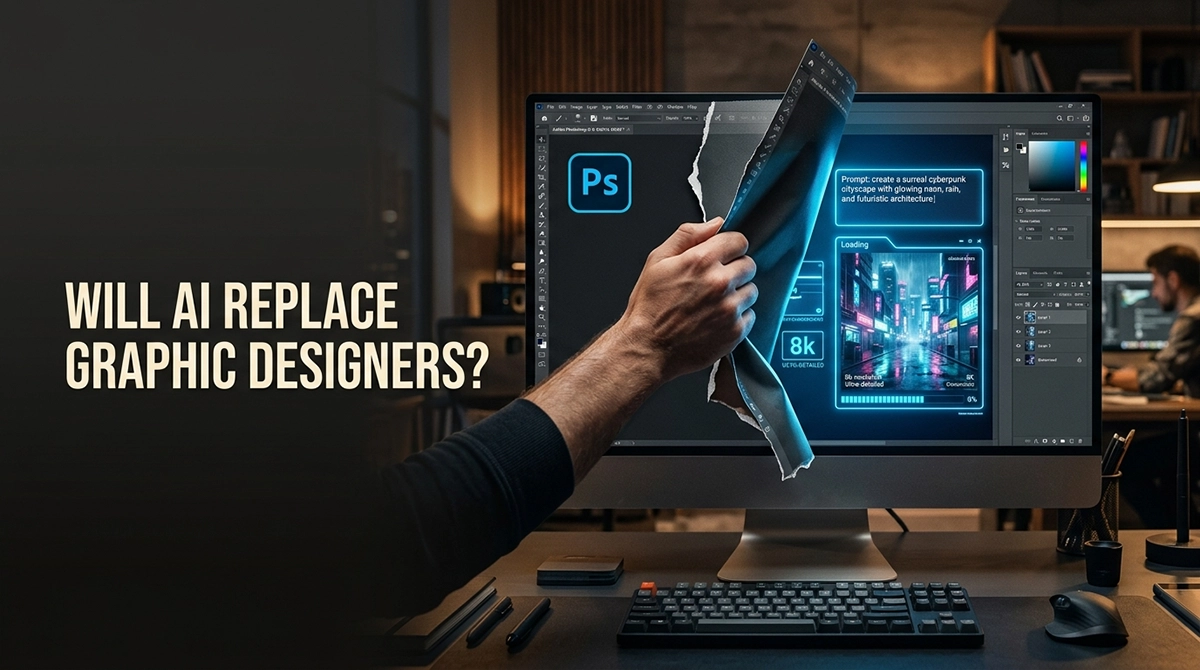
I’m not a designer myself, yet I create photorealistic imagery using nothing but sharp prompts and tools from our AI Finder. Many ask, “Will AI replace graphic designers?” when they see these results. My wife, a professional, uses these models as a subtle assistant for retouching, whereas I just use them for the heavy lifting. The real issue is the stubborn resistance I see in some design circles. It’s not about losing jobs to machines; it’s about the refusal to evolve and the fear of a shifting creative reality.
Table of Contents
The Photoshop Paradox: Can Taste Exist Without the Friction of Tools?
When I first started generating images with AI, I didn’t feel like I was “designing.” I felt like I was skipping the pain. No long hours mastering layers, no wrestling with masking tools. Just prompts, iterations, refinement. But the more I experimented, the more I realized something deeper was happening. The friction that once shaped taste was disappearing. And that shift forces a serious question: are we removing unnecessary barriers, or are we removing the very process that builds creative judgment?
The Death of the Learning Curve and Its Hidden Cost
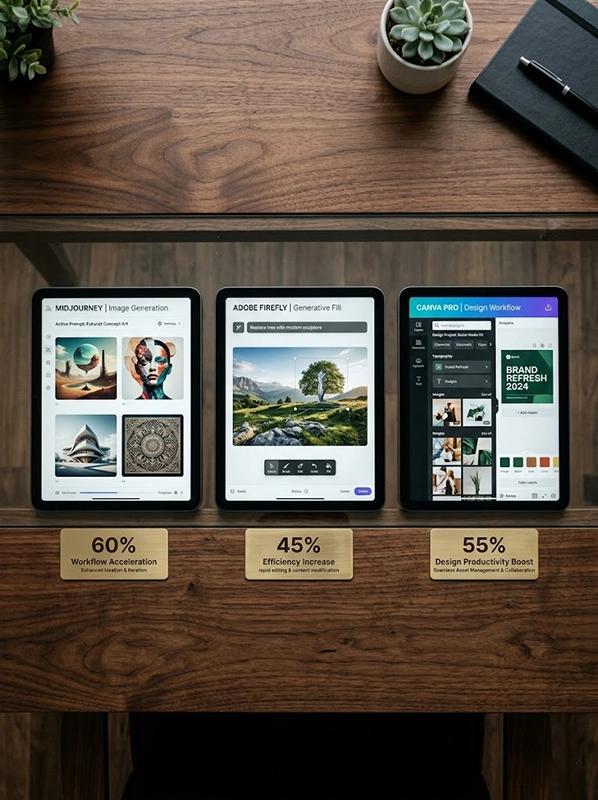
I’ve worked with many tools—Photoshop, Midjourney, Firefly, even platforms like Canva and different Canva Alternative solutions when speed mattered more than depth. At first, AI for graphic design felt like cheating the system. I could generate in minutes what used to take hours. But I noticed something interesting: without struggling through composition, color balance, and typography manually, I had to consciously train my eye. AI graphic designer tools accelerate output, but they don’t automatically build taste.
Will AI replace graphic designers who only know how to prompt?
From my own experience, prompting alone isn’t enough. I’ve created realistic visuals using advanced prompt structures, lighting cues, and style references. But when something felt off, I still opened Photoshop to adjust contrast, refine edges, or correct anatomy. That’s where the bigger question becomes unavoidable: Will AI replace graphic designers who can generate fast but cannot evaluate, refine, or direct visual quality? Maybe. Tools evolve quickly, but design judgment, visual hierarchy, and storytelling still come from human depth.
Beyond the Prompt: Why Strategy Is the New Craft
When I first started generating serious visuals with AI, I thought mastering prompts was the ultimate skill. But after months of experimentation, iteration, and refinement, I realized something bigger: execution is cheap, direction is rare. In ai graphic design, anyone can generate variations in seconds. What actually creates value is deciding what should exist in the first place. That shift—from operator to strategist—completely changed how I approach artificial intelligence graphic design in real projects.
The Shift from “Maker” to “Curator” in the AI Graphic Design Era
In my own workflow, I rarely “design” from scratch anymore. I generate, compare, discard, refine, and then curate. AI graphic design tools give me abundance, sometimes overwhelming abundance. The real skill becomes filtering noise. I’ve learned that strong artificial intelligence graphic design isn’t about producing ten images—it’s about selecting the one that aligns with business logic, branding, and psychology. The maker mindset focuses on output; the curator mindset focuses on alignment and strategic consistency.
The Psychological Toll of Effortless Creation
At first, effortless creation feels empowering. I could build in one evening what used to require days of coordination. But over time, I noticed something subtle: when everything becomes easy, nothing feels earned. I had to consciously slow myself down and evaluate decisions more critically. Without friction, creative discipline weakens. AI removes barriers, but it also removes the natural feedback loop that builds confidence through struggle. That psychological shift is something few articles discuss honestly.
From Pixels to Logic: How a CTO Sees the Future of Visual Language
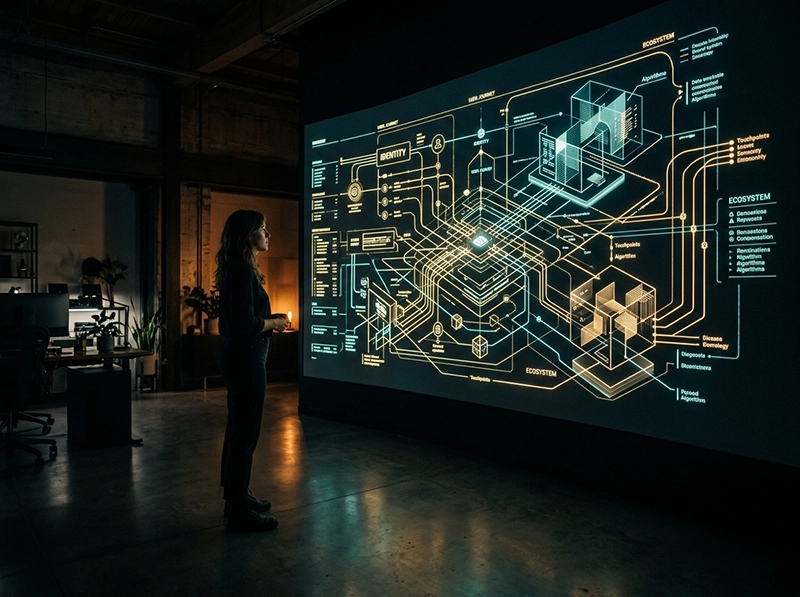
The deeper I integrated AI into my workflow, the more I stopped seeing images as static designs and started seeing them as outputs of systems. Visual content is no longer just pixels—it’s logic, iteration, probability, and structured prompting. That realization pushed me to explore how design connects with backend thinking, automation, and product architecture. The future of design doesn’t belong only to artists; it belongs to those who understand how intelligent systems behave.
Will AI replace graphic designers in the world of complex systems?
When I look at complex products—SaaS dashboards, AI-driven platforms, automation tools—I don’t ask whether visuals look good. I ask whether they scale. That’s where the real question emerges: Will AI replace graphic designers inside structured, system-based environments? From my experience, AI can generate assets quickly, but understanding user flows, cognitive load, and system behavior still requires human reasoning. In complex ecosystems, design is no longer decoration; it becomes decision architecture.
The Integration of LLMs in Motion Graphics AI and Beyond
I’ve experimented with motion graphics AI and advanced ai graphic design tools that integrate LLM-driven scripting. What fascinates me is not the animation itself, but the logic behind it. When language models guide motion timing, narrative pacing, and adaptive visuals, design starts behaving like software. This is exactly why collaboration between designers and AI Software Development Companies becomes inevitable. Visual storytelling is evolving into programmable media, and that shift changes how creative teams must think.
Personal Observation: Why I Trust a Designer Who Knows “How” Over One Who Knows “What”
From working closely with my wife and other designers, I’ve noticed a clear pattern. The strongest professionals aren’t the ones who simply know what looks trendy. They understand how light, contrast, hierarchy, and composition function at a structural level. When I generate images, I can spot when something feels wrong—but a designer who understands “how” can diagnose and fix it precisely. Tools change fast. Foundational thinking doesn’t.
The Ethical Landscape: Ownership in a Post-Human Design World
The more I used image models in real work, the less this felt like a simple productivity story. At first, I was just happy that I could generate strong visuals without being a trained designer. But once those outputs became close to client-ready, harder questions showed up. If I generate the image, tweak it in Photoshop, and shape the final mood with prompting, where does authorship actually begin? Watching my wife use AI differently made that question even sharper.
Navigating the Minefield of AI Generated Graphic Design
From my own experience, ai generated graphic design becomes risky the moment people confuse speed with originality. I’ve seen images that looked polished but carried visual habits borrowed from thousands of unseen sources. That is where artificial intelligence in graphic design becomes ethically messy. My wife usually solves this by treating AI as raw material, not final work. She takes layers, references, textures, and then rebuilds intention through real design choices. That difference matters, especially when originality, trust, and ownership are part of the brand itself.
The “Human Premium”: Why the Future Belongs to Systems Thinkers, Not Just Tool Users
As I spent more time building visuals myself, I noticed the biggest gap was never tool access. Anyone can open a model, test prompts, and get something impressive. The real gap appears after the image is generated. Some people stop at “good enough.” Others ask what the image should do inside a product, a campaign, or a brand system. That’s where the human premium lives. In practice, the future belongs less to fast tool users and more to people who think in relationships, consequences, and systems.
The Irreplaceability of Empathy and Context in Brand Evolution
I can generate attractive visuals quickly now, but I still notice a limit the moment emotion becomes specific. A brand is not just colors, lighting, or visual style; it carries memory, trust, and audience expectations. That’s why I often wonder: will ai replace graphic designers when the core of branding relies on human empathy? My wife is better at this than I am. She can look at an AI output and instantly feel whether it truly belongs to a real brand or just looks impressive in isolation.
Case Study: When AI Fails the “Human Connection” Test
I’ve had moments where an image looked technically great, almost cinematic, yet still felt wrong. One time I generated a polished visual for a practical business use case, and everything seemed perfect until my wife pointed out the emotional mismatch. The image was too dramatic for the audience and too artificial for the message. That moment stayed with me. AI tools for graphic design can produce beauty fast, but they still miss tone when the human context is subtle, cultural, or emotionally layered.
The Strategic Advantage of Knowing the ‘Underlying Code’ of Design
The designers I trust most are not the ones chasing every new feature. They understand structure. When I compare my own results with theirs, the difference is obvious: I can produce options, but they understand why one option works inside a larger system. That becomes critical when design is part of an Intelligent System of Systems, where visuals connect to product logic, user behavior, and automation. In that environment, the best ai tools for graphic design are useful, but strategic visual thinking becomes the real unfair advantage.
Conclusion
After using AI heavily myself, watching my wife integrate it professionally, and seeing some designers reject it entirely, my conclusion is simple. Will AI replace graphic designers? Not the ones who think, adapt, and refine. It will pressure those who mistake software familiarity for creative value. The surviving designer is not the one who worships old tools or blindly trusts new ones. It is the one who combines judgment, context, and human sensitivity with modern systems. In this shift, refusal is dangerous, but shallow adoption is dangerous too.