When I decided to experiment with online growth, I quickly realized something uncomfortable: I was not a marketer. My background was technical, so instead of traditional brainstorming I turned to AI tools for guidance. I tested different workflows, generated campaign ideas, and even used AI to produce images and short videos for social media. That early experiment became my first real exposure to AI in Digital Marketing. What started as curiosity slowly turned into a practical learning process about audience behavior, content positioning, and how digital marketing and AI can reshape the way campaigns are built.
Table of Contents
The Campaign That Was Going Nowhere
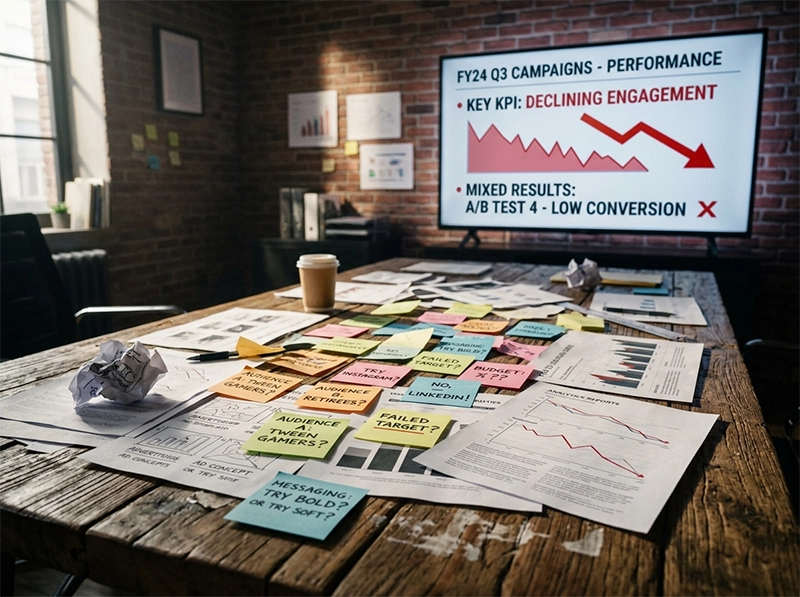
When I launched my first experimental campaign, everything looked active on the surface. Posts were scheduled, AI‑generated visuals were ready, and I even automated parts of the publishing workflow. From the outside it looked like a well‑organized project. But inside the analytics dashboard, the numbers told a different story. Engagement barely moved, traffic stayed flat, and nothing converted. That was the moment I realized activity alone does not equal strategy, even when the AI in Digital Marketing tools and technology seem impressive.
When Activity Is Not the Same as Strategy
As someone with a technical background, my instinct was to solve everything with tools. I tested AI image generators, short video creators, and automated content scheduling. In the early days I was fascinated by how quickly AI could produce visual assets. At one point I even caught myself thinking about a broader industry question many creators discuss today: Will AI Replace Graphic Designers, or will it simply change their workflow? That curiosity pushed me deeper into experimenting with digital marketing and AI rather than just copying what other campaigns were doing.
Why Traditional Brainstorming Failed Before AI in Digital Marketing Helped
Before turning seriously to AI‑assisted analysis, I tried solving the campaign problem using traditional brainstorming methods. I reviewed competitor content, collected trending topics, and even wrote long lists of potential campaign angles. The process felt productive, but it rarely produced ideas that were truly different. Most of the time the results looked like slightly modified versions of what everyone else was already publishing. That experience forced me to rethink how idea generation works when digital marketing and AI start interacting.
The Limits of Human‑Only Idea Generation
The turning point came when I compared my manual brainstorming process with the patterns AI could surface in seconds. Human discussions often circle around familiar assumptions, while machine‑assisted exploration can open completely different idea paths. That contrast became obvious when I started mapping how AI in Digital Marketing changes the speed of research and the diversity of campaign concepts. Instead of spending hours collecting scattered references, I could quickly explore patterns, angles, and audience questions that traditional brainstorming rarely revealed.
Traditional Brainstorming vs AI‑Assisted Brainstorming
| Traditional Brainstorming | AI-Assisted Brainstorming |
|---|---|
| Limited perspectives | Multiple idea paths |
| Time-consuming | Faster exploration |
| Team bias | External viewpoint |
| Manual research | Rapid information synthesis |
| Creative blocks | Continuous idea generation |
The AI Conversation That Changed the Direction
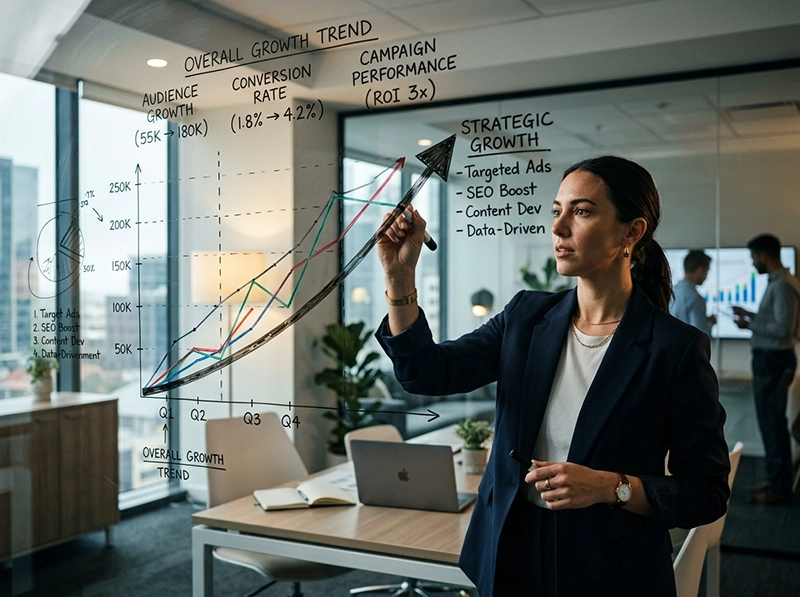
At this point, I stopped treating AI like a content machine and started using it as a thinking partner. Instead of asking for headlines or captions, I explained my campaign logic, the audience assumptions I had made, and the metrics that showed things were not working. The conversation slowly turned into something closer to a strategy review. As someone with a technical background, I approached the discussion almost like debugging a system. That shift changed how I viewed chatgpt marketing and the broader role of ai for digital marketing.
I Did Not Ask AI to Create a Campaign
One important detail: I never asked the AI to create a marketing campaign from scratch. Instead, I showed it what I had already built and asked it to challenge my assumptions. The interaction felt less like prompting a tool and more like discussing strategy with a colleague who had endless pattern recognition. In many discussions around AI tools, people often jump between platforms and compare models or search for a reliable chatgpt alternative, but the real value appears when the conversation focuses on reasoning rather than generation.
The First Useful Output Was Not Content, It Was Clarity
The first useful outcome was not a headline or a catchy social post. It was clarity. The AI highlighted gaps in my audience segmentation and suggested alternative messaging angles I had never tested. That moment changed how I looked at AI in Digital Marketing. Instead of seeing it as just another ai marketing platform, I began using it as a structured thinking assistant. It proposed social media scenarios, content directions, and even tools I could experiment with, including resources mentioned by platforms like HubSpot’s marketing AI research.
What the AI Helped Me See That I Was Missing
After several long conversations with the model, I realized something unexpected. The AI was not giving me magical marketing ideas. What it was actually doing was exposing blind spots in my thinking. Because my background is deeply technical, I naturally approach problems with systems, logic, and frameworks. That mindset works well in engineering, but marketing is different. Through iterative discussions and analysis, the AI began revealing patterns in my assumptions, which gradually improved how I approached ai and digital marketing strategy.
Audience Pain Points Were More Specific Than I Thought
Originally, I assumed my audience simply wanted better tools or smarter workflows. But when I analyzed the responses and questions generated during our conversation, a different pattern appeared. The real issue was uncertainty. Many readers were not looking for another tool; they wanted clarity in decision‑making. By combining insights similar to predictive analytics marketing logic with my own campaign data, I started to see how ai marketing tools could help reveal deeper behavioral signals hidden behind surface metrics.
My Messaging Was Too Technical
Looking back at my early campaign content, I could clearly see the influence of my engineering mindset. The posts were logical, structured, and full of frameworks, but they lacked emotional connection. During multiple iterations, the AI repeatedly suggested simplifying the language and focusing on outcomes instead of mechanisms. That shift helped me rethink how I used ai for marketing communication. Instead of explaining systems, I started explaining results, which created a more balanced voice between artificial intelligence and digital marketing expertise and human storytelling.
Social Media Needed Scenarios, Not Random Posts
One of the most practical insights came from analyzing my social media activity. I had been publishing posts regularly, but they were disconnected from each other. The AI suggested organizing content into scenario‑based clusters where each post would logically lead to the next. It even recommended experimenting with several ai tools for marketing and a few free ai tools for marketing for idea generation and analytics. Still, the best ai tools for marketing could not replace consistency, experimentation, and weekly review of what actually resonated with the audience.
What the AI Helped Me See That I Was Missing
After reviewing the campaign with AI, I realized the biggest problem was not the lack of activity. I had been active almost every day, writing posts, checking numbers, and adjusting small details. The real issue was that my strategy had blind spots I could not see alone. My technical background helped me build systems, but it also made me overvalue logic. Exploring the role of AI in Digital Marketing helped me slow down, question my assumptions, and look at the campaign from the audience’s emotional perspective.
Audience Pain Points Were More Specific Than I Thought
At first, I thought my audience wanted better content, smarter workflows, or more advanced tools. But through the conversation, I noticed something deeper. People were not only searching for solutions; they were trying to reduce uncertainty. That changed how I interpreted ai and digital marketing data. Using ideas similar to predictive analytics marketing, I compared comments, clicks, and weak engagement signals. The most useful ai marketing tools were not the ones that gave answers, but the ones that helped me ask sharper questions.
My Messaging Was Too Technical
When I looked honestly at my earlier messaging, I could see myself writing like an engineer, not like a marketer speaking to a confused reader. The posts were accurate, but they felt too structured, too rational, and sometimes too cold. AI helped me translate my technical thoughts into simpler outcomes. This is where a tool like an AI Writing Assistant can fit naturally, showing that the true value of AI in Digital Marketing is not as a replacement for strategy, but as a bridge between clear thinking and human language.
Social Media Needed Scenarios, Not Random Posts
My social media problem was not that I had no ideas. The problem was that my ideas were not connected. One post explained a concept, another shared a lesson, and another promoted something, but they did not guide the reader through a journey. AI suggested scenario-based content clusters, which helped me connect posts around one clear theme. I tested ai tools for marketing, including free ai tools for marketing, but even the best ai tools for marketing still needed discipline, review, and consistent execution to build a scalable workflow for AI in Digital Marketing.
What AI Got Right and What It Got Wrong

This part was important for me because I did not want to turn the article into an advertisement for AI. My experience was useful, but it was not perfect. Some outputs were surprisingly sharp, while others were too generic to use without heavy editing. As someone who works with systems and product decisions, I know every tool has constraints. Being honest about what worked and what failed makes the story more useful, more trustworthy, and closer to real marketing practice.
What AI Got Right
AI was very good at helping me break mental loops. When I kept rewriting the same message in different words, it offered new angles I had not considered. It also helped me structure social media scenarios, compare audience segments, and rethink weak campaign assumptions. In that sense, chatgpt marketing was less about getting perfect content and more about creating strategic movement. The best ai marketing tools I used did not replace my decisions; they helped me make those decisions with better context.
What AI Got Wrong
AI also made mistakes, and ignoring that would make the story less honest. Some suggestions sounded useful at first, but after comparing them with my real audience and business context, they were too broad. A few recommendations felt like something any ai marketing platform could generate without knowing my product deeply. It also mentioned paths connected to ai sales tools and marketing ai workflows that looked interesting, but were not practical for my stage, resources, or current campaign priorities. Understanding the limits of AI in Digital Marketing is crucial for long-term success.
The Real Lesson About AI in Digital Marketing
The real lesson was simple, but it took a failed campaign for me to understand it. The best use of AI in Digital Marketing happens when AI analyzes and the human decides. It can organize messy thoughts, reveal weak assumptions, and suggest new strategic paths, but it cannot fully understand my audience, timing, offer, or brand responsibility. That part still belongs to me. AI improved the campaign direction, but the judgment, risk, and final decision remained human.
AI Can Analyze, But It Cannot Own the Outcome
This became the biggest mindset shift for me. Before this experience, I sometimes expected tools to solve problems faster than my own thinking could. But marketing does not work like a backend script where clean logic always produces clean output. People are unpredictable, emotional, and context-driven. AI helped me analyze patterns, but I still had to choose what to publish, what to ignore, and what to test next. That responsibility made the process more realistic and more valuable.
Human Judgment Is Still the Competitive Advantage
In the end, my biggest advantage was not the tool I used. It was the combination of technical thinking, market feedback, and honest self-correction. AI gave me structure, but my experience gave meaning to that structure. I knew which suggestions matched my audience and which ones sounded good only on paper. Implementing AI in Digital Marketing without losing human intuition made the campaign stronger. For me, the future of marketing is not human versus AI; it is thoughtful humans using AI without surrendering their judgment.
Ultimately, the most important lesson from my failed campaign was that tools don’t win battles—strategies do. Integrating AI in Digital Marketing provided the analytical edge I was missing, but my human judgment remained the true pilot. Success lies not in letting machines take the wheel, but in using them to amplify your own intuition. By bridging the gap between technical efficiency and genuine human connection, you can transform any failing project into a winning roadmap.